The Best Crochet Stitch for a Scarf: A Beginner’s Guide That Actually Works
My first scarf took three tries. Not because the pattern was hard, but because I kept second-guessing myself — was single crochet too plain, had I chained enough, was my scarf supposed to be this narrow? If you’re standing in the yarn aisle asking yourself the same questions, this is the guide I wish I’d had.
Here’s a clear answer on the best crochet stitch for a scarf, plus a beginner-friendly pattern you can actually finish, and honest guidance on the chain counts and width questions every new crocheter runs into. No guessing required.
Quick Project Overview
- Difficulty: Beginner — a great first crochet project
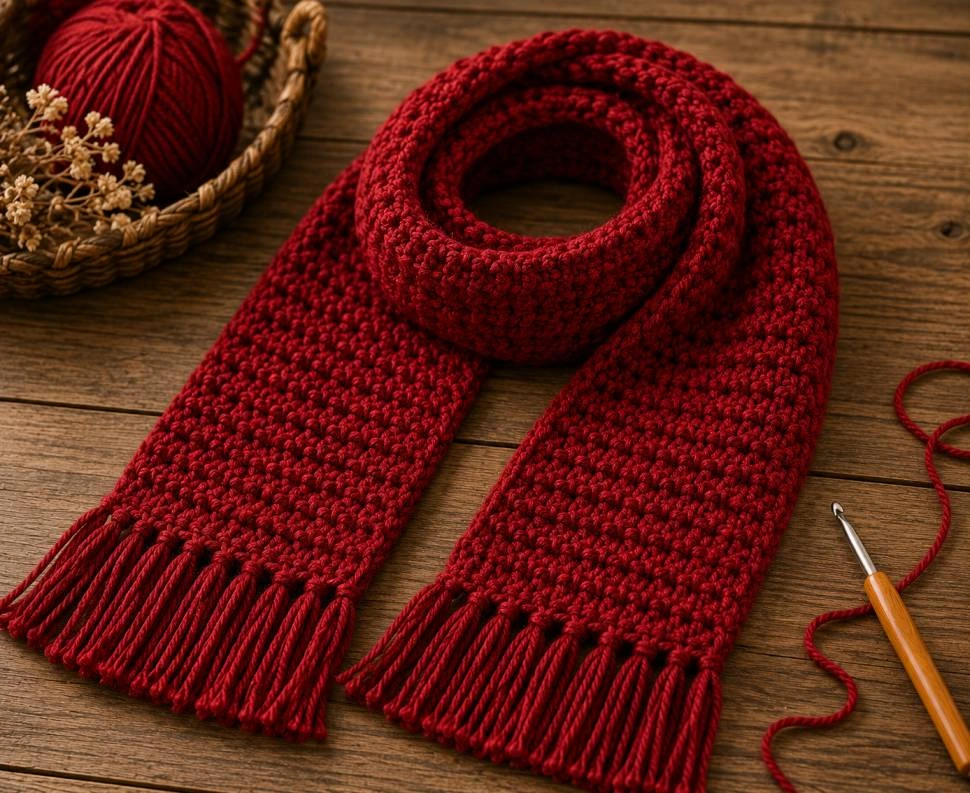
- Finished size: About 6.5″ wide by 60″ long (adjustable)
- Time: 4–8 hours, depending on experience
- Yarn: Worsted weight (Category 4)
- Hook: H/8 (5.00mm)
- Stitch: Single crochet, worked in rows
Why Single Crochet Is the Best Stitch for a Scarf
Ask five crocheters what the best stitch for a scarf is and you’ll get five answers — none of them wrong. But for a first scarf, single crochet wins for practical reasons. It creates a dense fabric that holds its shape and resists curling at the edges, unlike some open stitches. It’s also the stitch most beginner tutorials teach first, so you’re not learning a new technique and a new project simultaneously. And because every row repeats the same simple motion, it’s forgiving — if your tension wobbles early on, a scarf is exactly the low-stakes project where that won’t matter.
Half double crochet is a solid second choice once you’re comfortable — it works up faster and drapes a little softer. But for a genuine first project, start with single crochet.
Materials and Tools
- Yarn: 3–4 skeins worsted weight (600–800 yards total). Acrylic or acrylic-wool blends are affordable and machine washable.
- Hook: H/8 (5.00mm) — check your yarn label for recommendations.
- Yarn needle, scissors, and optionally a stitch marker for your first row.
Solid or lightly variegated yarns show off single crochet’s texture nicely and are easier to read while you’re still learning to spot your stitches.
Abbreviations Used
| Abbreviation | Meaning |
|---|---|
| ch | chain |
| sc | single crochet |
| st(s) | stitch(es) |
Gauge: Does It Matter for a Scarf?
Gauge usually determines fit, but a scarf gives you room to be flexible. With worsted weight yarn and an H/8 hook, single crochet works up around 13 stitches and 15 rows per 4-inch square. Fabric feels stiff? Size up your hook. Feels floppy? Size down. Either way, your scarf will turn out fine — gauge just fine-tunes the drape.
The Pattern:
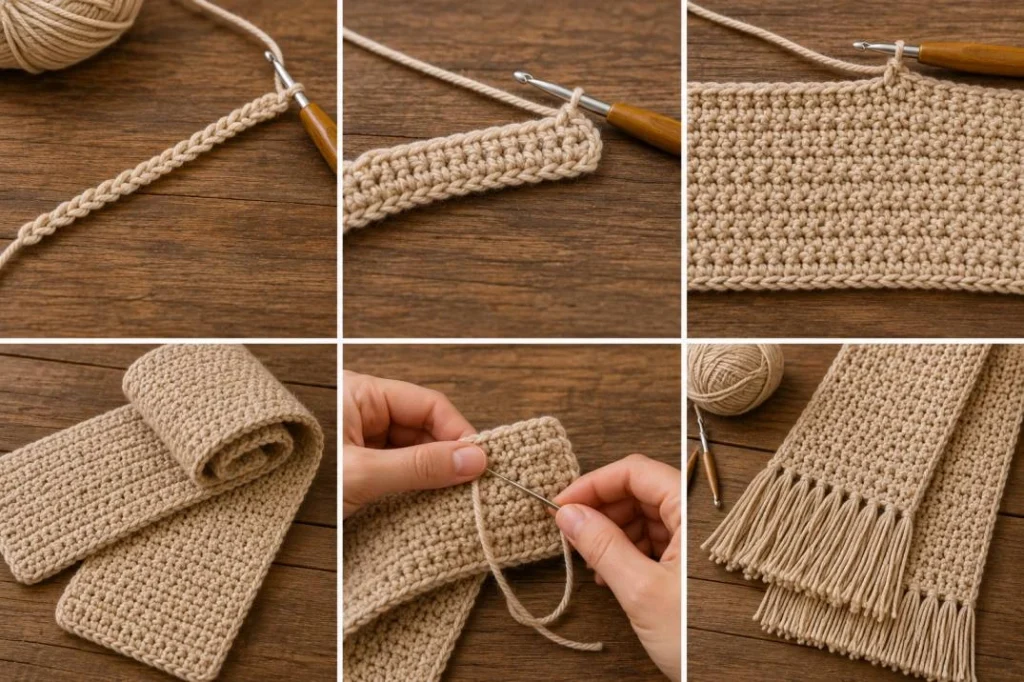
Beginner Single Crochet Scarf
This pattern is worked widthwise — chain the width first, then work rows until the scarf reaches your desired length. It’s the easiest approach for beginners since each row stays short.
Foundation Chain
Chain 26 for a finished width of about 6.5 inches, a classic scarf width. Want it wider or narrower? Add or subtract 2 chains for every half inch of width.
Row 1
Starting in the 2nd chain from the hook, sc in each chain across. Turn. (25 sts)
Row 2 and Beyond
Ch 1 (does not count as a stitch), sc in each stitch across. Turn. (25 sts) Repeat until your scarf measures about 60 inches, or your desired length — a good rule of thumb is roughly the wearer’s height, though 55–70 inches all work well.
Finishing
Fasten off, leaving a 6-inch tail. Weave in both starting and ending tails with a yarn needle, running them through several stitches in different directions so they hold up through wear and washing.
Optional Fringe
- Cut yarn strands about 10 inches long, two per fringe.
- Fold each pair in half, pull the loop through a stitch on the short edge.
- Insert the loose ends through the loop and pull to tighten.
- Repeat evenly along both ends, then trim to an even length.
Common Mistakes and Troubleshooting
- Curling edges: Tension too tight, or hook too small — size up.
- Stitch count drifting: Usually a sign of skipping the first or last stitch in a row. Count every few rows until it’s automatic.
- Stiff fabric: Loosen tension or size up your hook.
- Uneven width: Be consistent about whether you work into the turning chain or skip it.
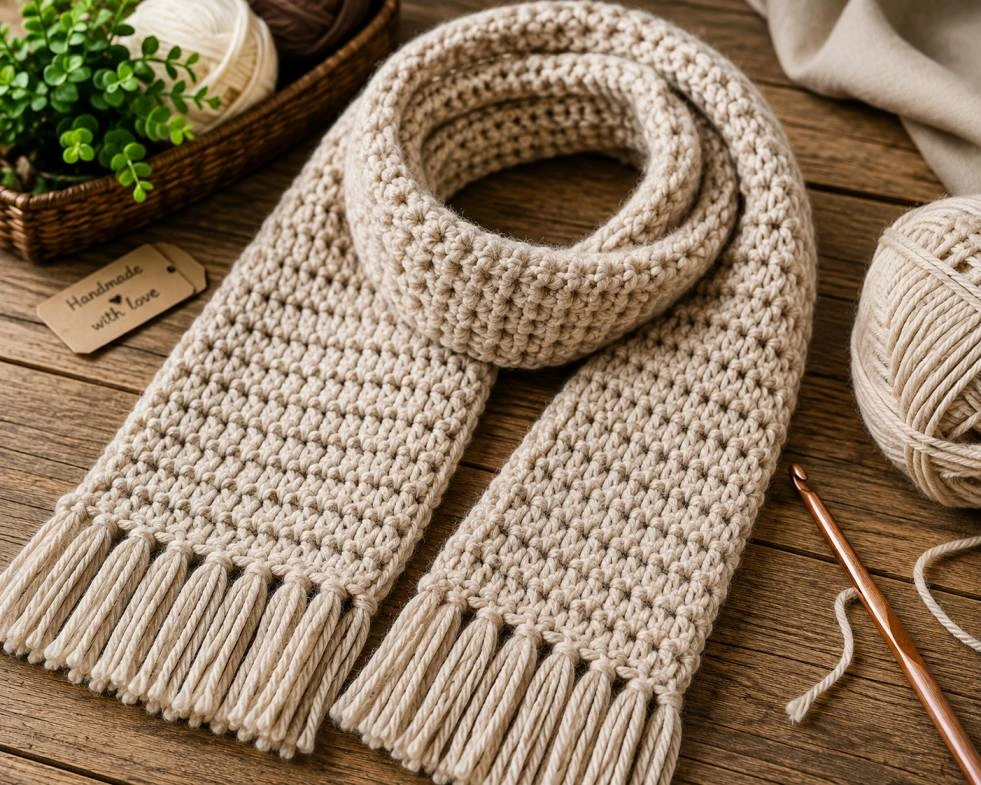
Customization Ideas
- Width: Adjust the foundation chain by 2 stitches per half inch.
- Stripes: Change colors every few rows for an easy pattern variation.
- Softer drape: Swap in half double crochet once you’re comfortable.
- Kid-sized version: Shorten to about 40 inches long and 4–5 inches wide.
Care Instructions
Most acrylic worsted yarns can be machine washed on gentle and laid flat to dry, which keeps the scarf from stretching. If you used wool, hand wash in cool water and lay flat to dry to avoid shrinking. Store folded rather than hung to keep the fabric from stretching over time.
Frequently Asked Questions
What is the most suitable crochet stitch for making a scarf?
Single crochet, for its sturdy, curl-resistant fabric and simple, repeatable motion. Half double crochet is a great next stitch to try once you’re comfortable.
How many chains should be crocheted for a scarf?
For a standard adult width with worsted yarn and an H/8 hook, chain 24 to 28 stitches. Fewer chains make it narrower; more make it wider.
Should you crochet a scarf lengthwise or widthwise?
Widthwise, especially as a beginner — each row stays short and manageable. Lengthwise scarves use a very long foundation chain that’s easy to miscount when you’re just starting out.
Is 20 stitches enough for a scarf?
It’ll give you a narrower Stole, around 5 inches wide — fine for a slim or child’s scarf, but most adult scarves land closer to 24–28 stitches.
Final Thoughts
A scarf teaches you nearly everything you need to know about crochet — tension, counting stitches, working in rows — without asking too much all at once. Pick up your hook, chain 26, and start. The best crochet stitch for a Stole isn’t really about finding a perfect technique; it’s about finding the one that gets you to a finished project you’re proud to wear.
Ready to get started? Grab your yarn and hook, cast on that first chain, and let yourself learn as you go — every crocheter’s first scarf is a little imperfect, and that’s exactly what makes it yours.