The Classic Potato Salad Guide: How to Make It Foolproof (Even If You’ve Never Made One Before)
I’ve watched more potato salads go wrong than right in home kitchens, and it’s almost never because of a bad recipe. It’s the small decisions — whole potatoes or cut, cold water or boiling, three tablespoons of mustard or one — that quietly decide whether you end up with something creamy and balanced, or a bowl of mush swimming in mayo.
So let’s fix that. This is the guide I wish someone had handed me when I started: no shortcuts, no guessing, just the reasoning behind every step so you actually understand why it works.
Here’s what you’ll walk away knowing:
- What actually belongs in a classic potato salad (and what’s optional)
- Whether to boil your potatoes whole or cut up — and why it matters more than you’d think
- The most common mistakes that wreck texture and flavor, and how to sidestep them
- A full, tested step-by-step recipe you can make tonight
- Answers to the questions people ask most before they even start cooking
What Is Classic Potato Salad Actually Made Of?
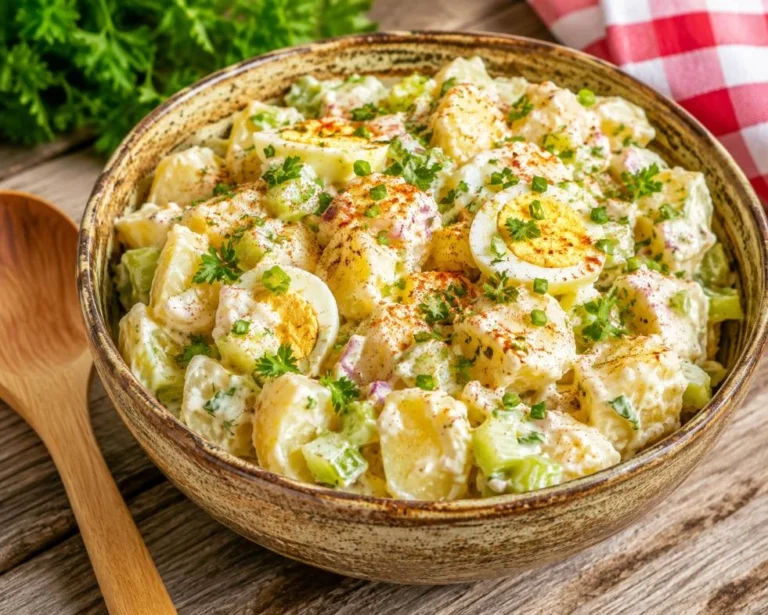
At its core, a classic potato salad is built from four things: well-cooked potatoes, a creamy dressing, some acid for brightness, and a handful of aromatics. That’s it. Everything else is style.
The dressing is where most of the debate lives. Traditional American potato salad leans on mayonnaise, often cut with a spoonful of yellow mustard for tang and color. Some cooks add a splash of pickle juice or vinegar to keep things from tasting flat — and honestly, they’re right to. A potato salad without acid is a potato salad that tastes like nothing.
As for the potatoes themselves, waxy varieties — Yukon Gold or red potatoes — are the better choice. They hold their shape after boiling instead of falling apart into starchy crumbs. Russets can work in a pinch, but you’ll need to handle them gently, since they’re far more prone to turning your salad gummy.
One question I get constantly: do you need to peel the potatoes? You don’t, especially with thin-skinned red or Yukon varieties. Leaving the skin on adds texture, a bit of nutrition, and honestly saves you time. Peel them if you want a smoother, more traditional look — it’s a preference, not a rule.
Boiling Potatoes the Right Way: Whole vs. Cut
This is the step where most potato salads succeed or fail, and it happens before the dressing ever enters the picture.
Start potatoes in cold water, not boiling. Dropping potatoes into already-boiling water cooks the outside faster than the inside, so you end up with mushy edges and a raw center. Cold water lets them heat evenly all the way through.
Boil them whole when possible, then cut after cooking. Cutting potatoes before boiling exposes more surface area to water, which means they absorb excess moisture and lose flavor. Whole potatoes cook more evenly and hold their structure — you just wait until they’re cool enough to handle, then cut them into your dressing at your own pace.
Salt the water generously. This is non-negotiable if you want a potato salad that tastes like something instead of nothing. Potatoes are bland by nature; salted water is your only chance to season them from the inside.
Test for doneness with a knife, not a clock. A fork or paring knife should slide in with just a little resistance. Pull them the moment they’re tender — potatoes left in boiling water even a few minutes too long turn gummy and starchy, which is the single most common complaint I hear about homemade potato salad.
The Mistakes That Quietly Ruin a Good Potato Salad
Most potato salad disasters trace back to one of these five habits.
Overcooking the potatoes. This is the top offender. Overcooked potatoes break down into a gluey texture that no amount of dressing can fix. Check early, check often.
Dressing hot potatoes immediately. Warm potatoes absorb dressing too aggressively, which can leave your salad greasy or unevenly seasoned. Let them cool to room temperature first — or better yet, toss them in a light vinegar splash while warm, then add the creamy dressing once they’ve cooled.
Going overboard on mustard or vinegar. A little goes a long way. Too much mustard turns the whole dish sharp and bitter instead of bright; too much vinegar overwhelms the potato entirely. Add gradually, taste as you go.
Skipping the seasoning check before serving. Potatoes absorb salt and acid as they sit, which is why a potato salad that tasted perfect an hour ago can taste flat by dinner. Always taste again right before serving and adjust.
Leaving it out too long. Potato salad contains mayonnaise and cooked starch — both of which are food-safety risks at room temperature. Keep it refrigerated until serving, and don’t leave it out longer than two hours (one hour if it’s a genuinely hot day). This isn’t a texture issue, it’s a safety one.
Classic Potato Salad — Step-by-Step Recipe
Instructions
- Boil the potatoes whole. Place potatoes in a large pot, cover with cold water, and add 1 tsp salt. Heat until it reaches a boil, then lower the heat to maintain a simmer.
- Cook until just tender. Simmer 15–20 minutes, checking with a paring knife starting at 15 minutes. Pull them the moment a knife slides in with slight resistance — do not overcook.
- Cool and cut. Drain the potatoes and allow them to cool until they can be handled safely. Cut into bite-sized cubes (peel first if you prefer a smoother texture).
- Season while warm. Drizzle the vinegar or pickle juice over the warm potato pieces and toss gently. Let cool to room temperature.
- Make the dressing. In a small bowl, whisk together mayonnaise and mustard until smooth.
- Combine. Add the cooled potatoes, celery, red onion, and chopped eggs (if using) to a large bowl. Pour the dressing over and fold gently until evenly coated — don’t overmix, or you’ll break down the potatoes.
- Season to taste. Add salt and pepper, tasting as you go.
- Chill. Refrigerate at least 1 hour before serving to let the flavors settle.
- Finish and serve. Just before serving, taste again and adjust salt or acid if needed. Top with fresh herbs and a dusting of paprika.
Chef’s Note: For a lighter version, swap half the mayonnaise for plain Greek yogurt. To enhance the flavor of the salad, consider adding a bit more pickle juice just before serving.
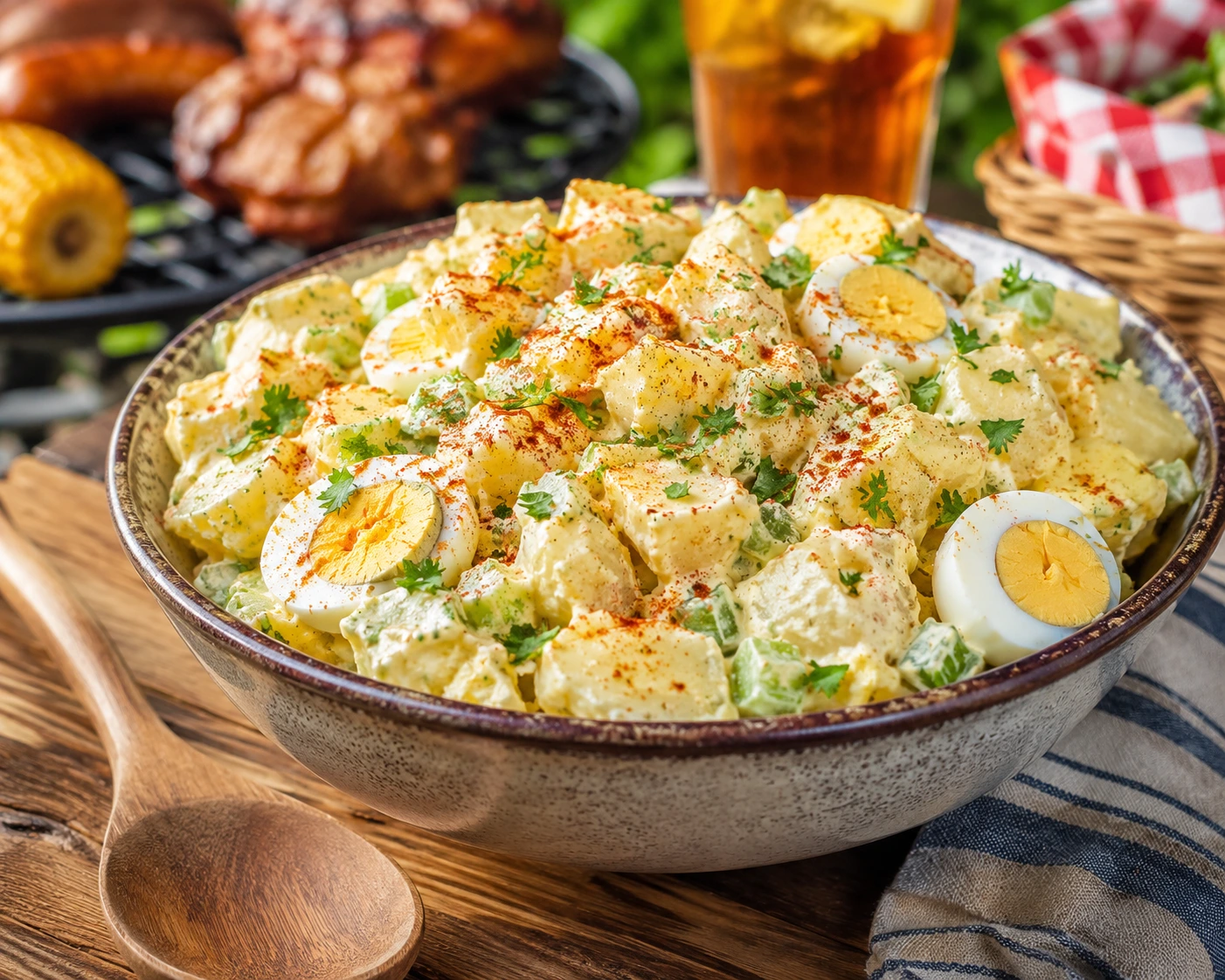
Classic Potato Salad (Easy Creamy Homemade Recipe)
Ingredients
Frequently Asked Questions
Why don’t you peel potatoes for potato salad? You don’t have to — thin-skinned varieties like Yukon Gold or red potatoes have skins tender enough to eat, and leaving them on adds texture and saves prep time. Peeling is purely a style choice for a smoother finish.
What makes potato salad gummy? Overcooking is the main cause. Once potatoes pass the point of “just tender,” their starch breaks down and turns pasty. Cutting potatoes before boiling (rather than after) can also make this worse, since more surface area is exposed to water.
Is it preferable to boil potatoes whole or chopped for potato salad? Whole is generally better. Boiling potatoes whole and cutting them afterward keeps them from absorbing excess water and helps them cook more evenly, so you get firmer, more distinct pieces instead of waterlogged chunks.
How do you prevent food poisoning from potato salad? Keep it refrigerated until serving, and never leave it at room temperature for more than two hours — or one hour on a hot day. Since it contains mayonnaise and cooked starch, it’s exactly the kind of dish that spoils quickly if left out.
Final Thoughts
Good potato salad isn’t about a secret ingredient — it’s about respecting a few small details: cold-water starts, whole potatoes, gentle seasoning, and patience while it chills. Get those right, and the rest is just personal taste.
Try this recipe this weekend, and don’t be afraid to make it yours — a little extra dill, a swap of Dijon for yellow mustard, whatever suits your table. If you do, I’d genuinely love to hear how it turned out and what twist you added.