
Protein Balls: Are They Actually Good for You?
A chef breaks down the facts — what’s in them, how many to eat, and how to make a dead-simple batch at home.
Below is my go-to base recipe. It takes about 15 minutes, requires zero cooking, and makes enough for the whole week.
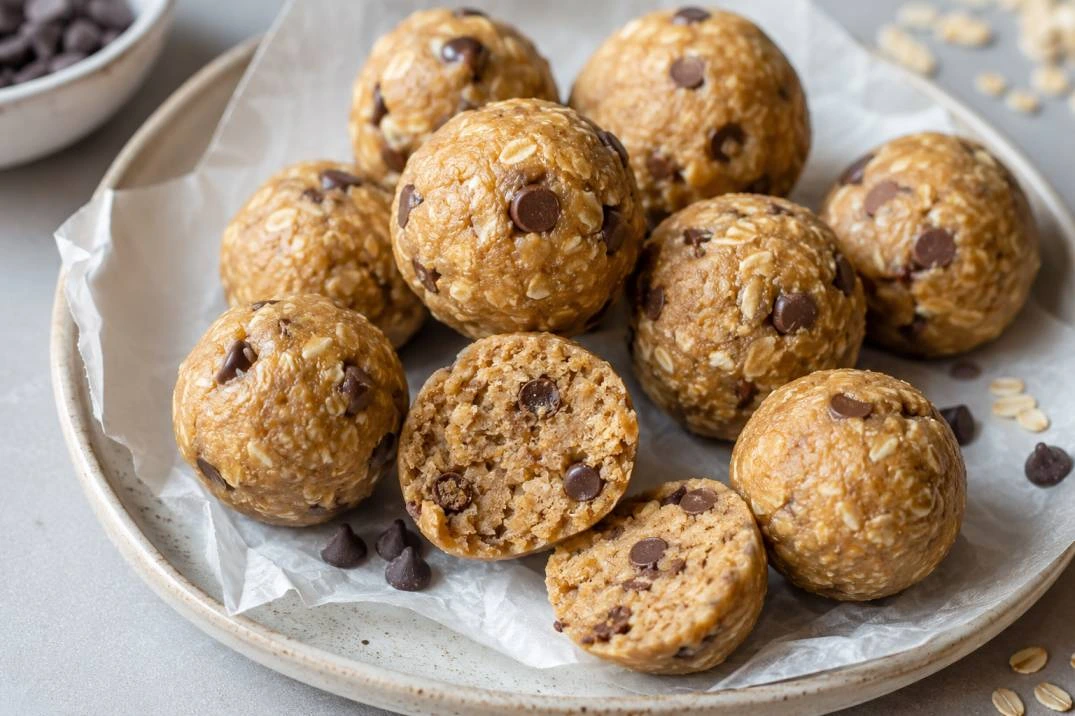
Protein Balls (Energy Bites)
Ingredients
What You’ll Learn
- Whether protein balls are genuinely healthy or just glorified candy
- How many you should actually eat per day (the 3-3-3 rule explained)
- What makes a store-bought protein ball worth buying
- A 4-ingredient homemade recipe you can prep in 15 minutes
Let me be straight with you: the first time I picked up a protein ball from a grocery store shelf, I had no idea what I was actually buying. It looked like a truffle. It smelled like peanut butter. It cost four dollars. I ate it anyway — and immediately wanted to know if I had just made a healthy choice or a very expensive mistake.
If you’ve had that same moment of confusion standing in the snack aisle, this guide is for you. We’re going to cut through the marketing noise and talk plainly about what protein balls are, whether they deserve a spot in your daily routine, and how to make a batch at home that actually tastes good.
Are Protein Balls Actually Healthy?
Here’s the straightforward answer: it depends entirely on what they contain. A protein ball made with rolled oats, natural nut butter, a drizzle of honey, and a scoop of protein powder? That’s a genuinely solid snack. A “protein ball” made with syrup, palm oil, and a label that buries sugar as ingredient number two? That’s a candy bar pretending to wear gym clothes.
The confusion often comes from protein powder itself. You’ve probably seen the headlines — “Why doctors say no to protein powder” — and honestly, those concerns aren’t unfounded. Many powders contain heavy metals, artificial sweeteners, and additives that aren’t great in large amounts. The good news is that when protein powder is one ingredient in a ball made with whole foods, you’re not consuming it in isolation. Context matters.
What makes a protein ball genuinely healthy comes down to three things: a reasonable amount of protein (at least 6–8 grams per ball), fiber from oats or seeds to keep you full, and a fat source like almond butter or cashew butter that slows digestion. When those three boxes are checked, you’ve got a snack that earns its name.
Quick tip: Homemade protein balls almost always win over store-bought, simply because you control every ingredient. But if you’re buying, flip the package over and check: sugar should not be in the top three ingredients.
How Many Protein Balls Should You Consume Each Day?
This is a frequently asked question, and the response often differs from what people expect. One to two balls per day is the sweet spot for most beginners. That’s it. They’re nutrient-dense, which sounds like a compliment — and it is — but it also means the calories add up faster than you’d expect.
You might have come across something called the 3-3-3 protein rule, which is a handy framework for thinking about protein intake throughout the day: aim to eat protein in 3 meals and 2–3 snacks, spacing it out so your body can actually use it rather than letting it go to waste in one big hit. A protein ball fits beautifully into that structure as a mid-morning or afternoon snack.
One thing dietitians consistently flag — and I think it’s worth repeating — is that protein balls are a supplement to a balanced diet, not a replacement for real meals. If you’re replacing lunch with three protein balls because they feel virtuous, you’re likely missing out on the vegetables, complex carbohydrates, and micronutrients your body actually needs. Think of them as a bridge between meals, not a destination.
As for timing: the best time to eat a protein ball is about 30–60 minutes before a workout, or right after one. Your muscles are primed to absorb protein in that window, and the combination of carbs and protein in a well-made ball is genuinely useful for recovery.
What Are the Healthiest Protein Balls to Buy?
If making your own isn’t in the cards right now, that’s completely fine. The store-bought market has genuinely improved in the last few years. When I’m evaluating a packaged protein ball, I look for four things: a short ingredients list, a recognizable protein source, low added sugar, and no ingredient I can’t pronounce.
Brands like Kodiak have gained a lot of attention, and for good reason — they tend to use whole grain oats and real protein sources rather than relying heavily on isolates and fillers. That said, even the best commercial options tend to add more sugar than you’d use at home, because sugar is cheap and it makes things taste good.
For weight loss specifically, look for balls under 200 calories, with at least 8 grams of protein and 2 or more grams of fiber. That combination will actually keep you full. A ball that’s mostly dates and chocolate chips — however delicious — is closer to a dessert than a functional snack.
What Do You Put in Protein Balls? (The Chef’s Breakdown)
Every great protein ball is built on the same simple formula: a binder, a protein source, a sweetener, and a mix-in. Once you understand those four roles, you can improvise endlessly.
The binder holds everything together — rolled oats and nut butter are the classics. The protein source is usually a scoop of protein powder, though Greek yogurt or hemp seeds work too. The sweetener should be minimal: a tablespoon of honey or maple syrup is plenty. And the mix-in is where you make it yours — dark chocolate chips, dried cranberries, shredded coconut, chia seeds.
Step-by-Step Instructions:
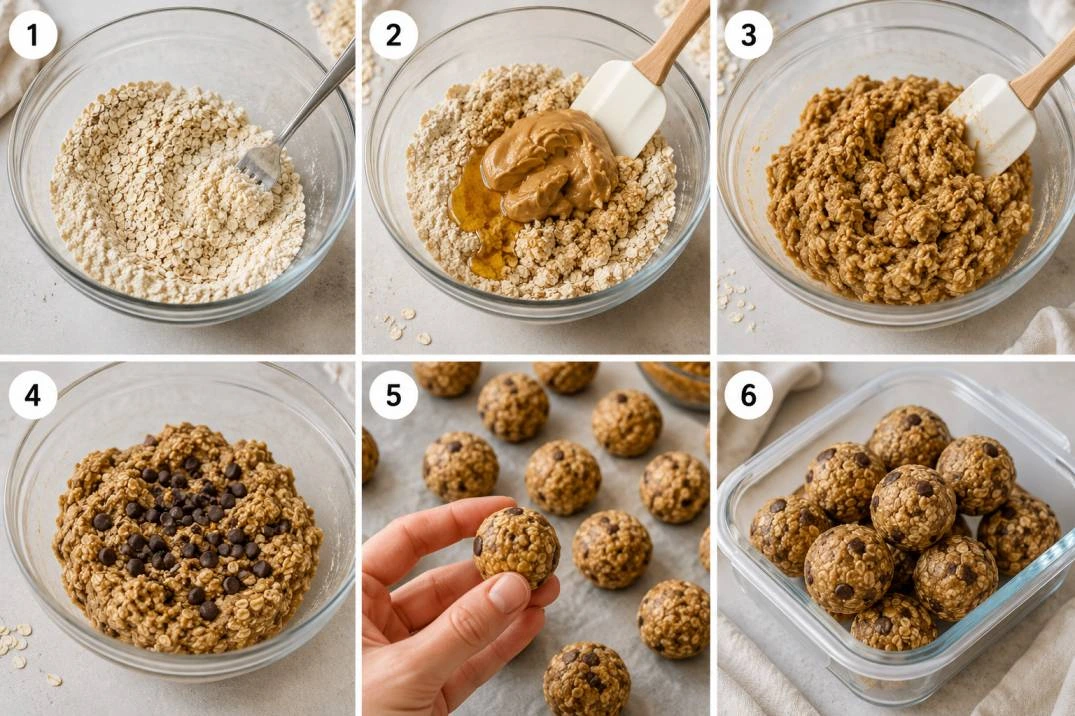
1 – Combine your dry ingredients
Add the rolled oats and protein powder to a large mixing bowl and stir them together with a fork. This makes sure the protein powder is evenly distributed before the wet ingredients go in — otherwise you end up with powdery pockets in some balls and none in others.
2 – Add your wet ingredients
Spoon in the peanut butter and drizzle the honey over the dry mixture. Using a sturdy spatula or your hands (clean ones!), mix everything together until a thick, uniform dough forms. It should feel like soft cookie dough — not crumbly, not sticky.
3 – Adjust the texture if needed
If the mixture feels too dry and won’t hold together, add one more tablespoon of nut butter or a tiny splash of water. If it’s too sticky to roll, add another two tablespoons of oats. Getting this right makes rolling so much easier.
4 – Fold in your mix-ins
Now’s the time to add chocolate chips, chia seeds, or whatever extras you’re using. Fold them in gently so they’re spread throughout the dough evenly.
5 – Roll into balls
Scoop out about one tablespoon of dough at a time and roll it between your palms into a smooth ball roughly the size of a large grape. Place each one on a parchment-lined baking sheet or plate. Wet hands slightly if the dough sticks to your palms.
6 – Chill and store
Refrigerate for at least 30 minutes before eating — this firms them up and improves the texture dramatically. Store in an airtight container in the fridge for up to one week, or freeze them for up to three months.
The Bottom Line
Protein balls, done right, are one of the most practical snacks you can keep in your fridge. They’re portable, filling, genuinely nutritious when made with clean ingredients, and — once you get the hang of that basic formula — endlessly customizable. I’ve made batches with espresso powder and dark chocolate for early-morning pre-workout fuel, and batches with dried cherry and coconut that my kids ask for by name.
The key is staying honest about what you’re making. A protein ball built on whole oats and natural nut butter is a legitimate healthy snack. One built mostly on sugar and chocolate with a marketing sticker on the front is dessert — and there’s nothing wrong with dessert, as long as you’re calling it what it is.
Make a batch this weekend. I think you’ll be surprised how easy it is, and how much better they taste than anything you’d pull off a store shelf.
Frequently Asked Questions
Will protein balls help you lose weight?
They can support weight loss, but they won’t do the work on their own. The reason they help is simple: a well-made protein ball is high in protein and fiber, both of which increase satiety and reduce the urge to snack on less nutritious foods. If a protein ball replaces a bag of chips or a pastry, that’s a genuine win. If you’re eating them on top of your regular diet without adjusting anything else, don’t expect the scale to move.
Do I need to refrigerate protein balls?
Yes — and this is non-negotiable if your recipe includes nut butter, honey, or any dairy-based protein powder. At room temperature, the fats in nut butter can go rancid within a day or two, and the texture gets unpleasantly soft. In the fridge, a batch lasts up to a week with no issues. For longer storage, the freezer is your friend: frozen protein balls thaw in about 20 minutes on the counter and taste just as good as fresh.
Why do doctors and dietitians say no to protein powder?
The concerns are real but often misunderstood. The main issues are: some protein powders have been found to contain trace heavy metals (like lead and arsenic), many are loaded with artificial sweeteners that can disrupt gut bacteria, and some people consume far more protein than their bodies can actually use. The key word here is moderation. One scoop of a clean, third-party tested protein powder used in a recipe is very different from drinking four shakes a day. If in doubt, look for powders with NSF or Informed Sport certification, which means they’ve been independently tested.
What is the ideal time to consume protein balls?
The two best windows are pre-workout (30–60 minutes before exercise) and post-workout (within an hour after). Before a workout, carbohydrates provide rapid energy, while protein prepares the muscles. Post-workout, your muscles are actively looking for amino acids to begin repair — and a protein ball delivers exactly that. Outside of exercise, mid-morning and mid-afternoon are ideal, when you’re past the satiety of your last meal but not yet at the hunger point where you’d reach for anything in sight.
Ready to Make Your First Batch?
Try the 4-ingredient recipe above this weekend and see how you feel. Once you nail the base, the variations are endless — and honestly, it becomes one of those things you just always have in the fridge. Drop a comment below and let me know which mix-in you tried first.





One Comment