Perfectly Seared Ahi Tuna
Golden crust, rare center, ready in under 10 minutes.
The first time I seared ahi tuna at home, I nearly ruined it out of pure nervousness. I stood over the pan, spatula in hand, convinced that a fish this expensive-looking needed to be babied — flipped constantly, poked, second-guessed. It doesn’t. Ahi tuna is one of the fastest, most forgiving proteins you’ll ever cook, and once you understand the two or three things that actually matter, you’ll get a steakhouse-quality sear every single time. This is the method I come back to again and again, and I’m going to walk you through it exactly the way I’d teach a friend in my own kitchen
Instructions:
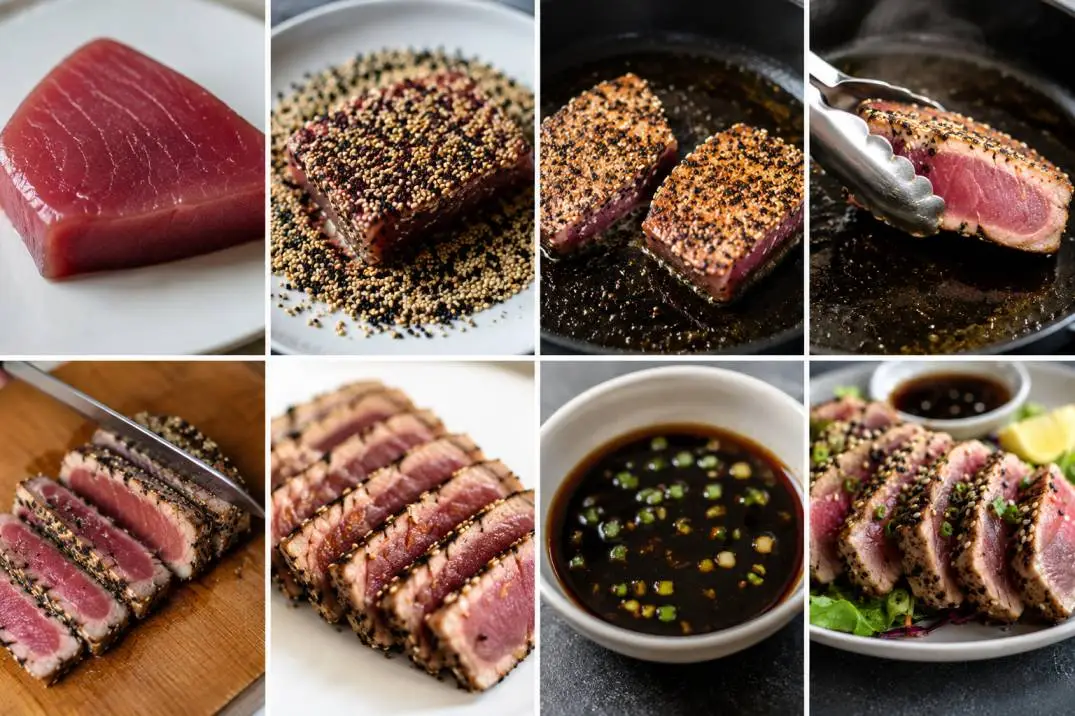
Dry and rest.
Pat the tuna steaks completely dry with paper towels and let them sit at room temperature for 15 minutes.
Build the crust.
On a plate, mix the cracked pepper, sesame seeds, and salt. Press each side of the tuna firmly into the mixture until fully coated.
Heat the pan hot.
Set a heavy skillet (cast iron is ideal) over high heat for a full 2–3 minutes, until it’s just short of smoking. This is the step most people rush, but it’s the one that makes all the difference.
Add oil, not butter — yet.
Swirl in the neutral oil. Oils with a high smoke point handle the heat you need; butter will burn before the pan is hot enough. Once the oil shimmers, you’re ready.
Sear fast.
Lay the tuna steaks in the pan and don’t move them. Sear 60–90 seconds per side for a rare center, or up to 2 minutes per side if you prefer it more medium-rare. You want a crisp golden-brown crust with a thin cooked band and a cool, red center.
Butter, if you want it.
In the last 30 seconds, you can drop in a tablespoon of butter and spoon it over the tuna for extra richness — this is where butter earns its place, after the sear is already set.
Rest and slice.
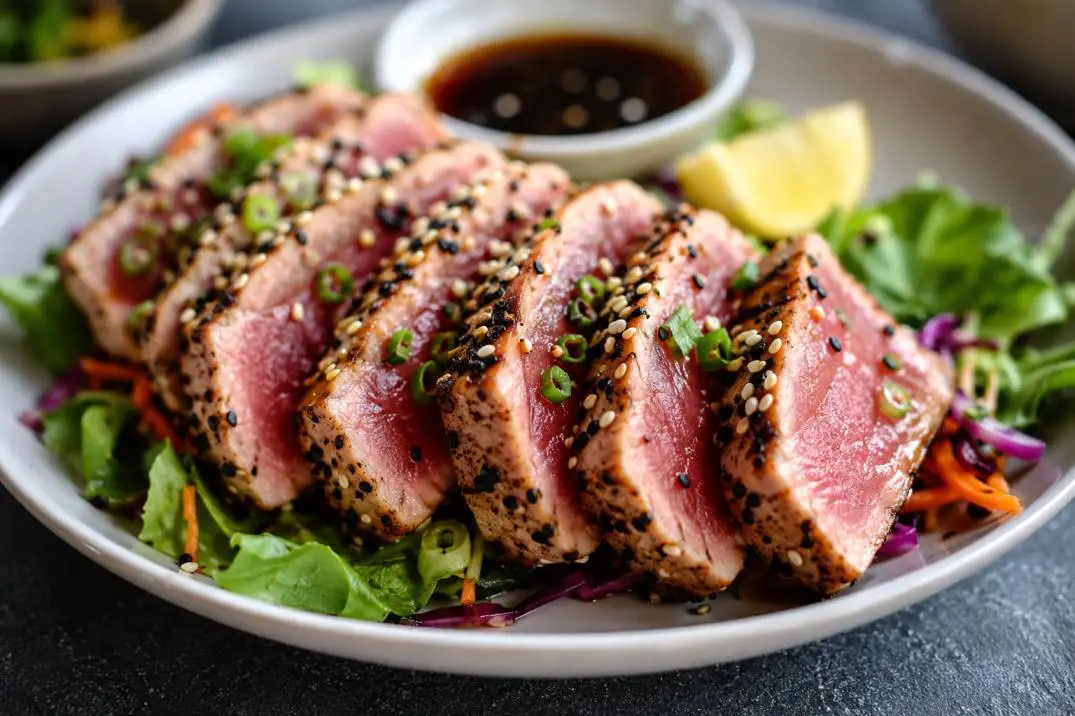
Move the tuna to a cutting board and let it rest 2 minutes. Slice against the grain into half-inch pieces to show off that ruby center.
What Makes Ahi Tuna Different From Other Fish
Ahi tuna — whether it’s yellowfin or bigeye — is a dense, meaty fish that’s typically served rare to medium-rare in the center, almost like a beef steak. That’s not a stylistic choice; it’s the whole point of the cut. The exterior gets a fast, hot sear while the inside stays cool, silky, and deep red. For this to work safely and taste right, you want sushi-grade or “sashimi-grade” tuna from a reputable fishmonger, which simply means it’s been handled and frozen according to standards that make eating it rare safe.
Prepping Your Tuna: What Actually Matters
Should you rinse it first?
This one trips people up. The instinct to rinse raw fish under the tap feels like basic hygiene, but it’s actually counterproductive. Rinsing doesn’t remove bacteria in any meaningful way — cooking does that — and all it accomplishes is adding surface moisture that fights against a good sear. Instead, pat your tuna steaks dry with paper towels. A bone-dry surface is the single biggest factor in getting that deep golden crust instead of a gray, steamed exterior.
Let it come to room temperature
Take the tuna out of the refrigerator 15–20 minutes before cooking. A cold center means the outside can overcook before the middle even warms up, and with a cut this thin, that window closes fast.
Do you need to marinate it?
Not really — and that’s good news. A quick marinade (soy sauce, sesame oil, a little ginger and garlic, 15–20 minutes max) adds a nice savory note, but ahi tuna‘s flavor doesn’t need rescuing the way tougher cuts do. If you’re short on time, skip the marinade entirely and lean on a dry rub instead. Either approach works; just don’t marinate longer than 30 minutes, since the acid and salt will start to “cook” the exterior of the fish, similar to ceviche.
Chef’s tip: If you want maximum flavor with zero fuss, a simple dry rub of cracked black pepper, sesame seeds, and flaky salt pressed onto all sides gives you a beautiful crust and lets the tuna’s natural flavor lead.
Common Mistakes That Ruin a Good Sear
Cooking it all the way through. This is the one to watch for. Fully cooking ahi tuna isn’t unsafe — it just defeats the purpose. You lose the tender, almost buttery texture that makes ahi special and end up with something dry and chalky, more like canned tuna than a $20-a-pound cut deserves. If you genuinely prefer fish cooked through, a flakier variety like halibut or salmon will reward you more than ahi will.
A pan that isn’t hot enough. A lukewarm pan gives you gray, steamed fish instead of a seared crust — no matter how good your rub is.
Skipping the room-temperature rest. Cold-from-the-fridge tuna cooks unevenly in a cut this thin.
Perfectly Seared Ahi Tuna (Restaurant-Quality at Home)
Ingredients
Frequently Asked Questions
Should I sear tuna in butter or oil?
Start with a neutral, high-smoke-point oil like avocado or grapeseed oil for the actual sear — butter burns at the high heat you need. If you love the flavor of butter, add it at the very end and baste the tuna for the last 30 seconds instead.
Should I rinse ahi tuna before cooking?
No. Rinsing adds extra moisture, making it harder to achieve a good sear, and it does little to improve food safety.Pat it dry with paper towels instead — that’s what gives you a crisp crust.
Is it okay to fully cook ahi tuna?
It’s safe, but it’s not really recommended — ahi is prized for its rare, tender center, and cooking it through tends to leave it dry and tough rather than showcasing what makes the cut special. If you want a fully-cooked fish, you’re generally better off choosing a different variety.
How long does ahi tuna take to cook?
For a classic rare sear, about 60–90 seconds per side in a very hot pan — roughly 2–3 minutes total. If you prefer medium-rare, go closer to 2 minutes per side, but any longer and you risk cooking it through.