The Only Potato Salad Recipe You’ll Ever Need
A straight-talking guide for anyone who’s ever ended up with mush, glue, or a bowl of bland mayo and potatoes — and wants to fix that for good.
By a chef who has ruined more potato salads than you have, so you don’t have to.
I still remember the first potato salad I ever made professionally. I was twenty-two, cocky, and absolutely certain that boiling potatoes was the easiest job in the kitchen. Forty minutes later I had a pot of gray, waterlogged mush that fell apart the second I touched it with a spoon. My chef took one look, dumped it, and said, “Potato salad isn’t hard. It’s just unforgiving.” He was right. Every step matters — and every step is easy once someone actually explains it to you.
That’s what this guide is. No filler, no twelve-ingredient dressing you’ll never make twice. Just the real technique behind a potato salad that holds its shape, tastes like something, and doesn’t send anyone home with a stomachache.
The Potato Decision Nobody Tells You About
Here’s the thing most recipes skip: potato salad isn’t really about the dressing. It’s about the potato. Get the wrong one, and no amount of mayo or vinegar is going to save you.
You want a waxy potato — Yukon Golds, red potatoes, or fingerlings. They’re low in starch and hold their shape after boiling, which means your salad stays chunky and distinct instead of turning into a bowl of potato paste. A russet, by contrast, is high-starch and built for fluffy mashed potatoes or a crisp fry — not for sitting in dressing and staying intact.
Peeling is genuinely a matter of taste, not correctness. I leave the skins on red potatoes for texture and color, and I peel Yukon Golds when I want a smoother, more classic diner-style salad. Neither one is “wrong.” What is wrong is peeling and cutting potatoes, then leaving them exposed to air for too long before cooking — they’ll oxidize and turn a dull gray.
Boiling: The Step That Makes or Breaks You
Always start your potatoes in cold water, then bring everything up to a boil together. If you drop cold potatoes into already-boiling water, the outside cooks far faster than the inside, and you end up with a mushy exterior wrapped around a raw center. Starting cold lets the potato cook evenly all the way through.
Salt the water generously — it should taste like the sea. This is your only real chance to season the potato itself, since the inside never really absorbs flavor from the dressing later.
Simmer, don’t boil aggressively. A hard rolling boil knocks the potatoes against each other and against the pot, which is how the edges start to crumble. A gentle simmer gets you there just as fast, with a lot less collateral damage. Depending on size, whole small potatoes take about 15–20 minutes; larger ones cut into chunks take closer to 10–12. You’re done when a knife slides in with almost no resistance — not when the potato is falling apart.
• • •
Building a Dressing That Actually Tastes Like Something
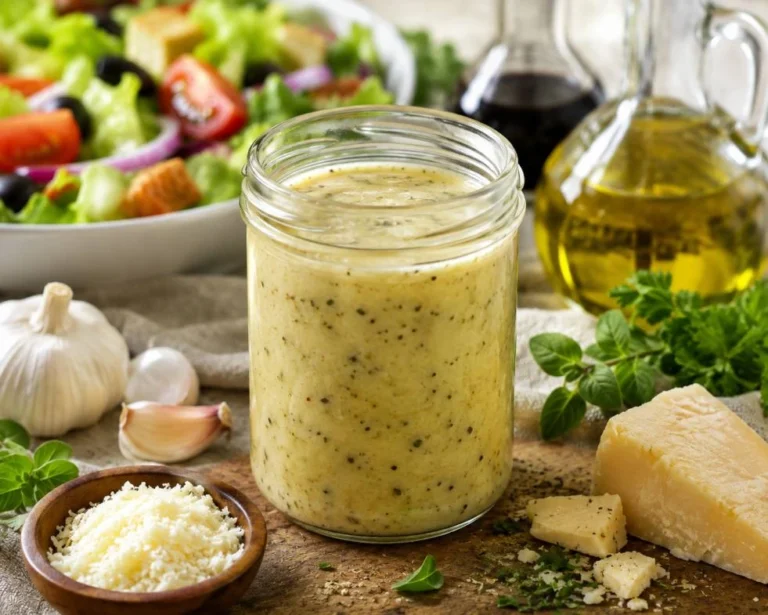
A classic American potato salad dressing is mayonnaise-based, but mayo alone is flat. It’s rich, but it’s one-note. The dressings that actually taste good layer in acidity, sharpness, and a little sweetness to cut through all that fat.
My baseline ratio, for about two pounds of potatoes: mayonnaise as the base, a spoonful of yellow or Dijon mustard for tang, a splash of apple cider vinegar or pickle brine for brightness, finely diced celery and red onion for crunch, and chopped dill or sweet pickles for that little sparkle of sweetness. Salt and black pepper go in last, tasted and adjusted — potato salad dressing should taste slightly too strong on its own, because the potatoes will mellow it out once everything’s mixed together.
The dressing should taste bold in the bowl by itself. Once it hits a pound of warm potato, it mellows out fast — that’s the whole trick.
The Recipe: Step by Step :
Method
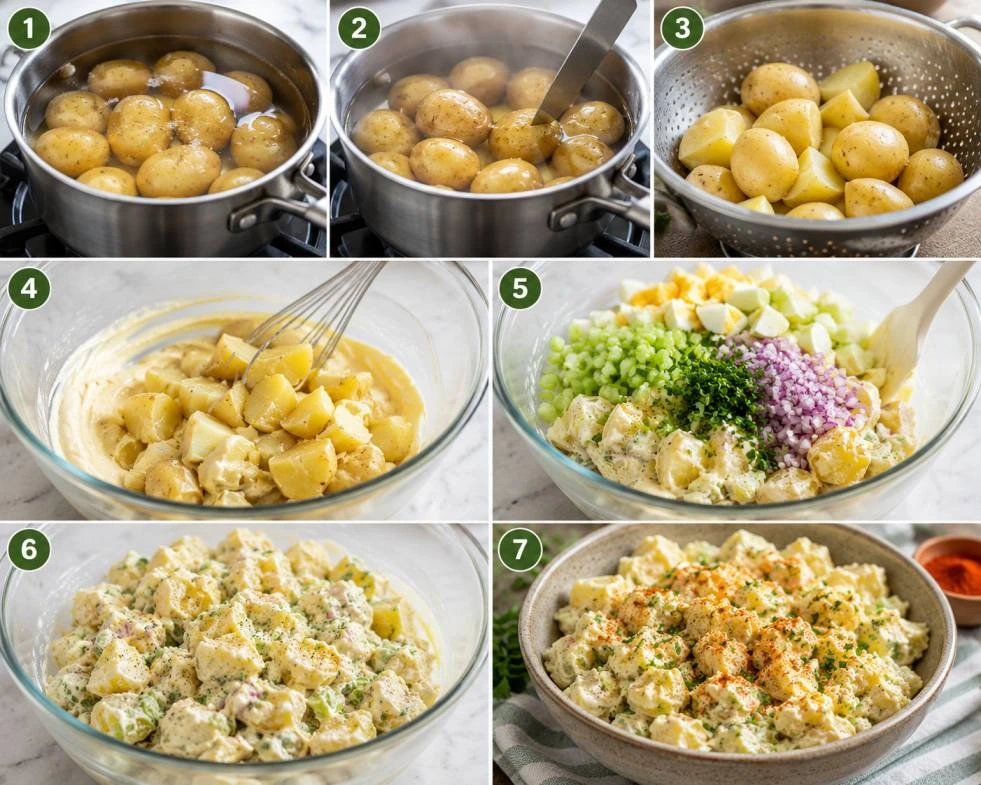
Cook the potatoes:
Place the potatoes in a large pot and add cold water until it covers them by approximately one inch. Add a generous tablespoon of salt. Bring to a boil, then reduce to a gentle simmer.
Simmer until tender:
Cook for 12–18 minutes, checking with a knife tip around the 10-minute mark. You want no resistance, but the potato should still hold its shape.
Drain and cool slightly:
Drain in a colander and let the potatoes sit for about 5 minutes — just long enough to handle, not long enough to go cold. Cut into bite-sized pieces if you boiled them whole.
Dress while warm:
In a large bowl, whisk together the mayonnaise, mustard, and vinegar. Add the warm potatoes and toss gently — warm potatoes soak up dressing far better than cold ones.
Fold in the rest:
Add celery, red onion, chopped eggs, and herbs. Fold gently with a spatula rather than stirring hard, so the potatoes stay intact
Season and chill
Taste, then adjust salt and pepper. Cover and refrigerate for at least 30 minutes before serving — this is when the flavors actually come together.
Finish and serve:
Dust with paprika right before serving for color and a faint smoky note.
Where Potato Salad Goes Wrong
Almost every disappointing potato salad fails for one of the same handful of reasons, and once you know them, they’re easy to dodge.
Overcooking the potatoes. This is the number one culprit behind gummy, gluey potato salad. Once starch cells rupture from overcooking, they release a sticky substance that turns your salad into paste the moment you stir it. Check for doneness early and often — you can always cook a potato longer, but you cannot uncook it.
Dressing cold potatoes. Cold starch seizes up and resists absorbing flavor. Warm potatoes are porous and open, which is why professional kitchens always dress potatoes the moment they’re cool enough to touch, not after they’ve sat in the fridge.
Going overboard on mustard or vinegar. Both are meant to be accents, not the main event. If you’ve added too much of either, the fix is the same: fold in a bit more mayo and a handful of extra diced potato or celery to dilute and rebalance, rather than trying to “cook it out.”
Skipping food safety. This is the one that actually matters for people’s health, not just their taste buds. Potato salad contains mayonnaise, eggs, and moisture-rich vegetables — a textbook environment for bacteria once it sits in the danger zone between 40°F and 140°F (4°C–60°C). Never leave it out for more than two hours, or one hour if it’s a genuinely hot day outdoors. At a picnic or barbecue, keep the bowl nested in a larger bowl of ice.
Classic Chef’s Potato Salad
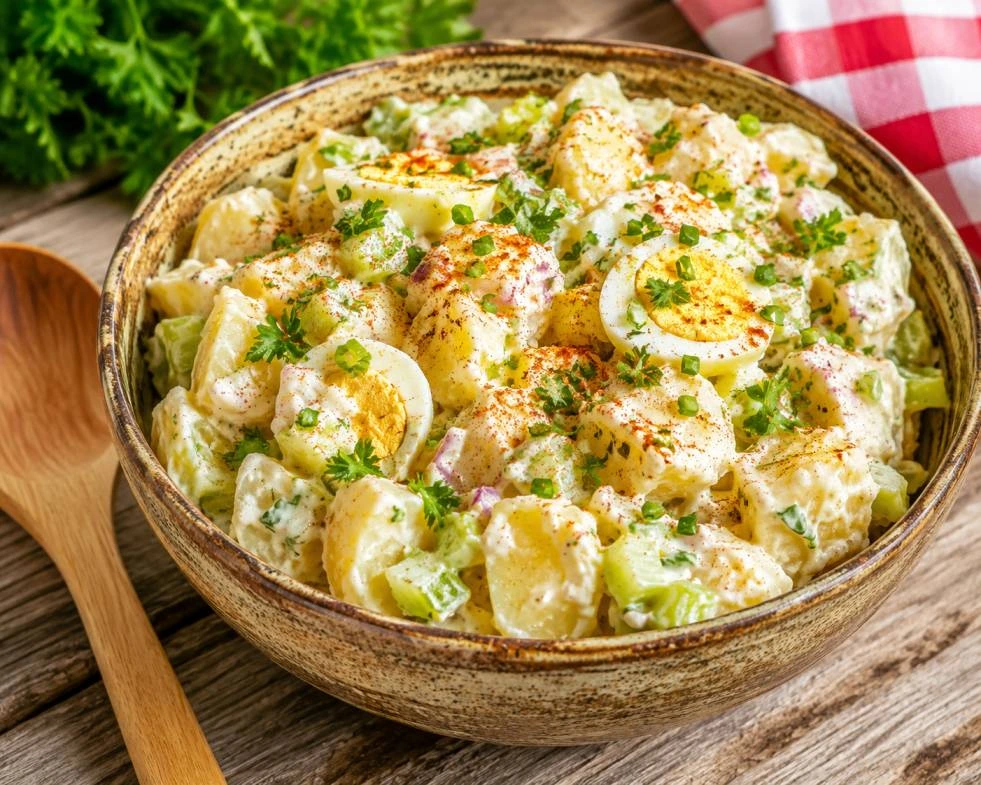
Classic Potato Salad (The Only Potato Salad Recipe You’ll Ever Need)
Ingredients
Notes
- Waxy potatoes (Yukon Gold, red, fingerling) hold together. Starchy potatoes (russet) fall apart.
- Start potatoes in cold, salted water — never drop them into boiling water.
- Dress the potatoes while they’re still warm; they absorb far more flavor that way.
- Mayonnaise is the classic base, but mustard, vinegar, and pickle brine do the real work of flavor.
- Potato salad is a food-safety risk at room temperature — treat it like the dairy-adjacent dish it basically is.
Make It Your Own
Once you’ve got the technique down, the format is endlessly flexible. A French-style potato salad skips mayonnaise almost entirely, dressing warm potatoes in a simple vinaigrette of oil, vinegar, mustard, and shallots — lighter, brighter, and served slightly warm rather than chilled. A Japanese potato salad goes the opposite direction: potatoes are partly mashed rather than left in chunks, then combined with cucumber, carrot, and ham, bound together with a slightly sweeter, tangier mayonnaise like Kewpie.
Neither is more “correct” than a classic American potato salad — they’re just proof that the same basic technique (cook potatoes properly, dress them warm, balance fat with acid) can lead to a dozen different, equally valid, dishes.
Your Turn in the Kitchen
Pick a waxy potato, start it in cold water, and dress it warm — that’s genuinely 80% of the battle won. Make this recipe once, taste it, and adjust the mustard and vinegar to your own preference next time. That’s how you turn someone else’s recipe into your own.
Frequently Asked Questions:
Should I peel my potatoes before or after boiling?
Either works, but boiling with the skin on and peeling afterward (if you want it peeled at all) keeps more nutrients and flavor in the potato, and makes the skins far easier to slip off by hand. Peeling before boiling is faster if you’re short on time, but exposes more surface area to the water, which can wash out some flavor.
What actually makes potato salad turn out gummy?
Overcooking is almost always the cause. Once potatoes are cooked past tender, their starch cells break down and release a sticky compound that turns gluey the moment you stir or mash them. The fix is simple: pull the potatoes as soon as a knife meets no resistance, and handle them gently from that point on.
How long can potato salad safely sit out?
No more than two hours at room temperature — and only one hour if it’s above roughly 90°F (32°C). Because it’s built on mayonnaise and often includes egg, potato salad sits squarely in the food-safety “danger zone” once it warms past refrigerator temperature. When serving outdoors, keep the bowl set into a larger bowl of ice.
Why does homemade potato salad sometimes turn watery?
This usually comes down to moisture the potatoes were still holding when they were dressed, or vegetables like celery and onion releasing liquid as they sit. Let boiled potatoes steam-dry in the colander for a few minutes before dressing, and if you’re making the salad ahead, hold back a portion of the dressing to fold in fresh right before serving.