How to Make Jerk Chicken That Actually Tastes Jamaican (Not Just Smoky-Sweet)
Here’s a confession: for years, I thought jerk chicken was just barbecue chicken with a fancier name. Sticky, sweet, maybe a little spicy — throw on some store-bought “jerk seasoning” and call it a day. Then I actually watched a Jamaican cook make a batch from scratch, and I realized I’d been getting it wrong the whole time.
The real secret isn’t the sugar or the smoke. It’s two ingredients almost every bottled seasoning blend either skips or barely acknowledges: Scotch bonnet peppers and allspice (called pimento in Jamaica). Without those two working together, what you’ve got isn’t jerk — it’s just a chicken wearing a jerk costume.
If you’ve ever made “jerk chicken” that tasted more like teriyaki with cayenne, this post is for you. We’re going to build real jerk flavor from the ground up, avoid the mistakes that trip up most home cooks, and get you a recipe you can actually trust.
Instructions
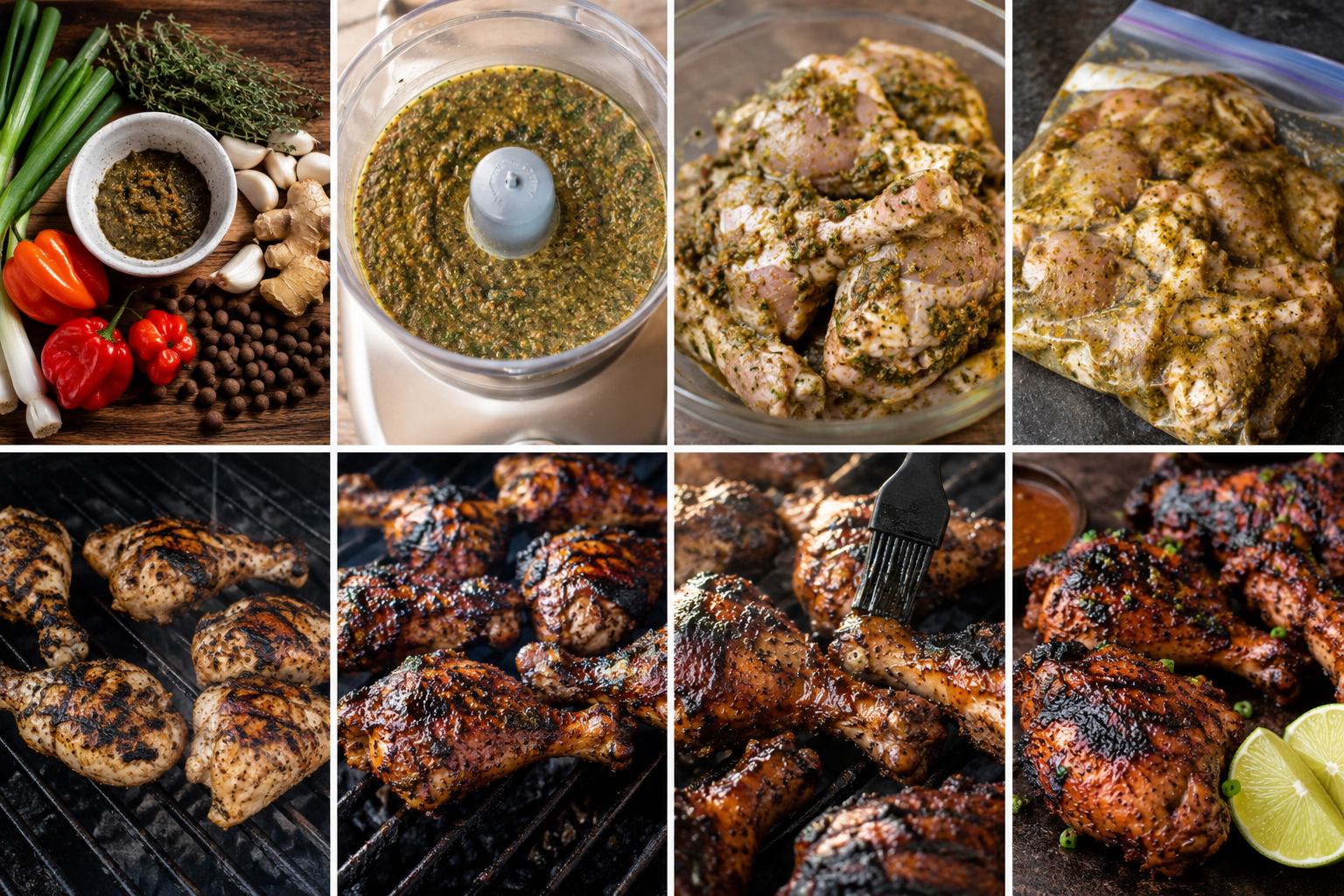
Make the paste
Combine Scotch bonnets, allspice, scallions, garlic, ginger, thyme, lime juice, soy sauce, brown sugar, oil, cinnamon, nutmeg, salt, and pepper in a blender. Blend until smooth.
Marinate
Coat the chicken thoroughly with the paste, working it under the skin where you can. Cover and refrigerate for at least 4 hours, ideally overnight.
Bring to room temperature
Remove chicken from the fridge 30 minutes before cooking.
Grill
Preheat grill to medium-high (around 375°F). Place the chicken skin-side down on the grill and cook for 6–8 minutes until nicely charred. Flip and grill for an additional 25–30 minutes, turning occasionally, until the internal temperature reaches 165°F.
Rest and serve
Let the chicken rest for 5 minutes before serving. Traditionally paired with rice and peas or fried plantain.
No grill? A 425°F oven works too — roast on a wire rack for 35–40 minutes, then broil for 2–3 minutes at the end to char the skin.
What Actually Makes Something “Jerk”?
Let’s clear this up first, because it trips up almost everyone. Jerk isn’t a flavor profile you can approximate with brown sugar and paprika. It’s a specific technique and a specific set of ingredients that developed in Jamaica, traditionally involving pimento wood smoke, Scotch bonnet chiles, and allspice berries.
You don’t need pimento wood to get close to the real thing at home (most of us don’t have access to it anyway). But skipping the Scotch bonnet and allspice is where things go sideways. Scotch bonnets bring a fruity heat that’s genuinely different from jalapeño or even habanero — and allspice tastes like a warm, peppery blend of cinnamon, clove, and nutmeg all at once, which is exactly the backbone jerk seasoning needs.
So when a recipe calls itself “Caribbean jerk” but leans on chili powder and liquid smoke instead? That’s not wrong, exactly — it’s just a different dish wearing the name.
The Marinade: Why Longer Really Is Better
This is where most home cooks lose patience. You mix up a beautiful, fragrant marinade, and it’s tempting to think 30 minutes of soak time is enough. It isn’t.
Jerk marinade needs time to actually penetrate the chicken, not just coat the surface. Four hours is the bare minimum for real flavor. Overnight — 12 to 24 hours — is where the magic happens. The acid from citrus and vinegar starts to tenderize the meat while the allspice and Scotch bonnet slowly work their way in.
As for what to marinate it in: a mix of citrus juice (lime or orange), vinegar, and a small amount of oil gives you both acidity for tenderizing and enough fat to help carry the spice flavors. Skip marinades that are mostly soy sauce and sugar — they’ll caramelize nicely on the grill, but they won’t taste like jerk underneath that glaze.
Getting the Seasoning to Actually Stick
Here’s a mistake I made for years: treating jerk seasoning like a dry rub. Sprinkle it on, pat it in, done. The problem is that dry seasoning slides right off chicken skin, especially once it hits heat and starts to render fat.
The fix is simple — make it a wet paste, not a powder. Blend your Scotch bonnet, allspice, garlic, scallions, ginger, thyme, and citrus juice into a thick, spoonable marinade using a blender or food processor. This paste clings to the chicken the way a dry rub never will, and it means every bite gets seasoning, not just the pieces that happened to catch some powder.
Choosing the Right Cut of Chicken
Bone-in, skin-on thighs and drumsticks are the move here, and it’s not just tradition — it’s practical. Dark meat holds up to both the long marinade time and the higher, more direct heat that jerk chicken typically gets on the grill. Boneless skinless chicken breast dries out fast under these conditions and won’t develop the same crisp, charred skin that makes jerk chicken worth the effort in the first place.
If you’re set on breast meat, it’s doable — just watch your internal temperature closely and consider a slightly shorter marinade time, since the acid can start to break down the more delicate texture faster.
A Quick Note on Jerk Chicken and Health
Jerk chicken made at home with fresh ingredients is generally a reasonably balanced dish — it’s grilled rather than fried, and the heat comes from peppers rather than added fat. That said, sodium and sugar content can add up depending on how much salt and brown sugar go into your marinade, so if you’re managing a specific dietary need, it’s worth adjusting those to taste or checking with a nutrition professional for guidance tailored to you.
Jerk Chicken Recipe
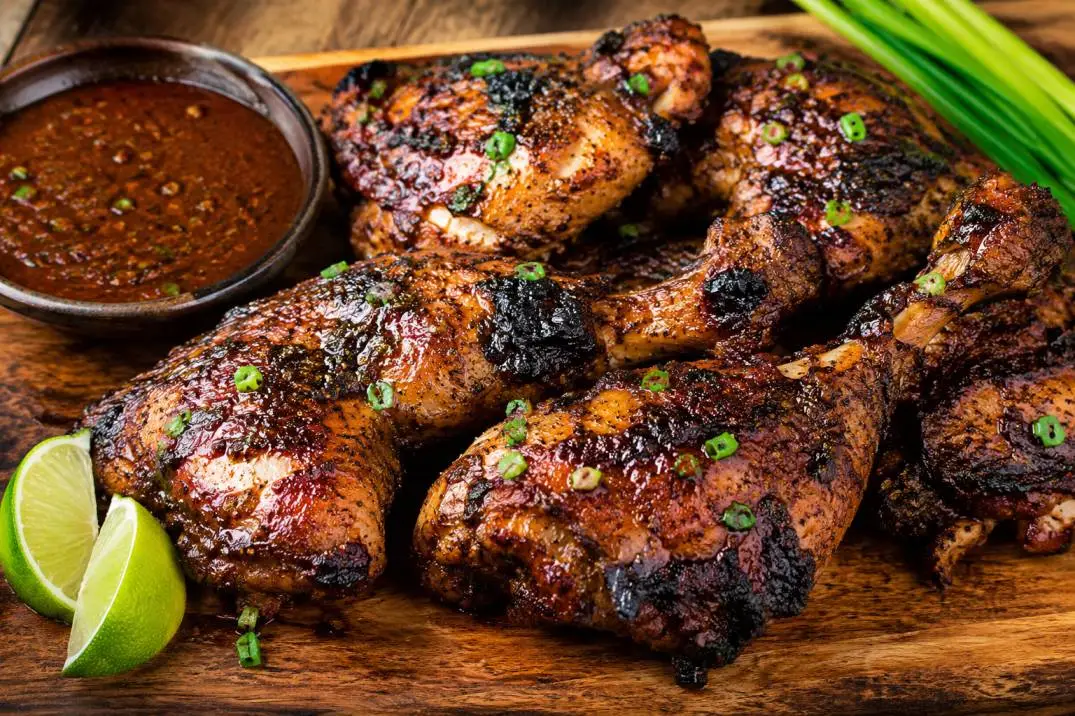
Authentic Jamaican Jerk Chicken
Ingredients
Notes
Key Takeaways
- Real jerk flavor comes from Scotch bonnet peppers + allspice, not smoke and sugar alone
- Marinate for at least 4 hours, ideally overnight — 30 minutes won’t cut it
- Bone-in, skin-on chicken thighs and drumsticks hold up best to the marinade and the grill
- A wet paste (not a dry rub) is what makes jerk seasoning actually stick to the chicken
- Jamaican jerk and generic “Caribbean jerk” are not interchangeable terms
Frequently Asked Questions
What’s the best liquid to marinate jerk chicken in?
A combination of citrus juice (lime works especially well) and a small amount of soy sauce gives you the acidity needed to tenderize the meat and carry the spice flavors deep into the chicken. Avoid marinades that are mostly sugar-based liquids — they’ll caramelize nicely but won’t deliver real jerk flavor underneath.
What’s actually in authentic jerk seasoning?
At its core: Scotch bonnet peppers, allspice, scallions, garlic, ginger, and thyme, balanced with a bit of citrus, salt, and sometimes brown sugar. The Scotch bonnet and allspice combination is what separates real jerk seasoning from generic “Caribbean spice” blends.
How do you get jerk seasoning to stick to the chicken?
Use a wet paste rather than a dry rub. Blending your aromatics and spices with citrus juice and a little oil creates a thick marinade that clings to the chicken’s surface, rather than sliding off the way a dry seasoning blend tends to.
What gives jerk its distinctive flavor?
The heat from Scotch bonnet peppers combined with the warm, complex flavor of allspice is what defines jerk. Traditional preparations also use pimento wood smoke, though a good marinade and proper grilling technique can get home cooks remarkably close without it.