The Easiest Snickerdoodle Recipe You’ll Ever Bake (And Why Most People Get It Wrong)
I still remember the first batch of snickerdoodles I ever pulled out of a home oven that wasn’t mine. They were flat, pale, and tasted suspiciously like a plain sugar cookie wearing a cinnamon costume. Something was missing. It took me years of testing (and a fair number of sad, flat cookies) in professional kitchens to figure out that snickerdoodles aren’t just “sugar cookies with cinnamon.” They have one quiet, unassuming ingredient doing all the heavy lifting behind the scenes. Once you understand it, you can’t go back.
If you’ve ever wondered why your snickerdoodles come out chewy one time and cakey the next, you’re about to find out. Let’s bake.
Key Takeaways Before You Start
- The real secret to snickerdoodles is cream of tartar, not the cinnamon-sugar coating everyone assumes.
- Room-temperature butter and eggs make a genuine difference in texture, not just a nice-to-have.
- Slightly underbaking is the trick to that soft, chewy center bakeries are famous for.
- You can make these in under 30 minutes, start to finish, no chilling required.
What Actually Makes a Snickerdoodle a Snickerdoodle
Here’s the thing most recipe blogs skip over: the cinnamon-sugar coating is what people notice, but it’s not what makes a snickerdoodle taste like a snickerdoodle. That job belongs to cream of tartar. It’s a byproduct of winemaking (yes, really) and it reacts with baking soda to create a very specific tangy, almost sourdough-like flavor note underneath all that cinnamon warmth. It also affects texture, giving the cookie a slightly softer, more tender chew than a standard sugar cookie.
Skip it, and you’ll still get a cookie. You just won’t get a snickerdoodle. It’ll taste flatter, sweeter in a one-note way, and honestly a little forgettable.
Ingredients You’ll Need
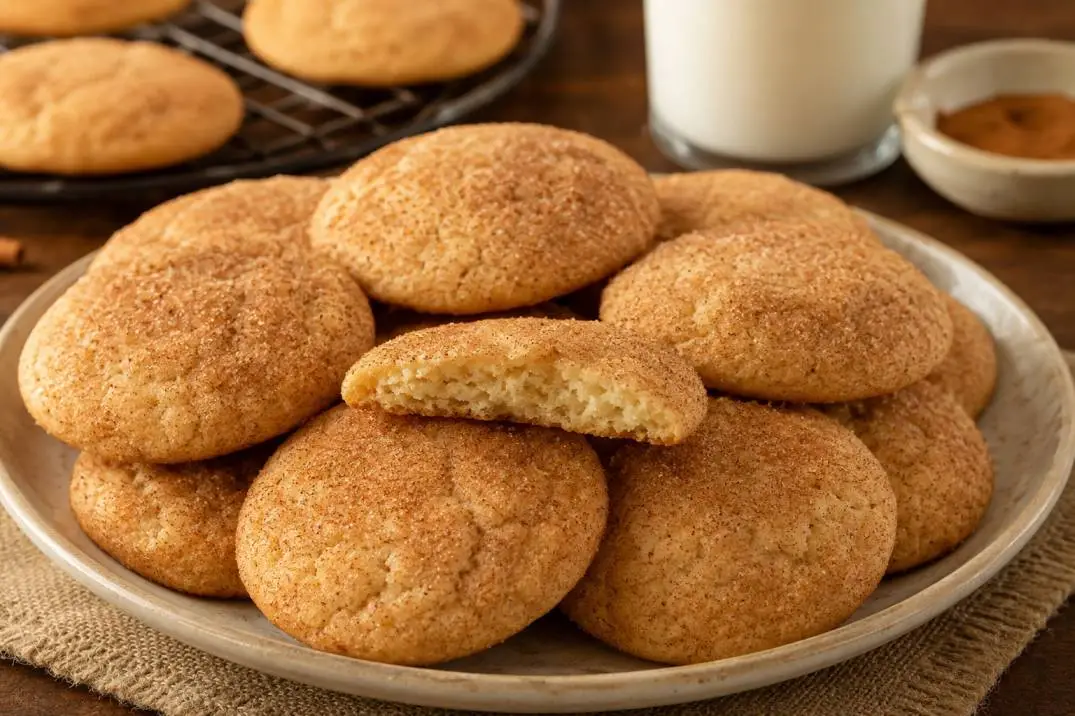
The Easiest Snickerdoodle Recipe You’ll Ever Bake
Ingredients
Notes
Key Takeaways Before You Start
- The real secret to snickerdoodles is cream of tartar, not the cinnamon-sugar coating everyone assumes.
- Room-temperature butter and eggs make a genuine difference in texture, not just a nice-to-have.
- Slightly underbaking is the trick to that soft, chewy center bakeries are famous for.
- You can make these in under 30 minutes, start to finish, no chilling required.
Step-by-Step Instructions
1. Preheat and prep
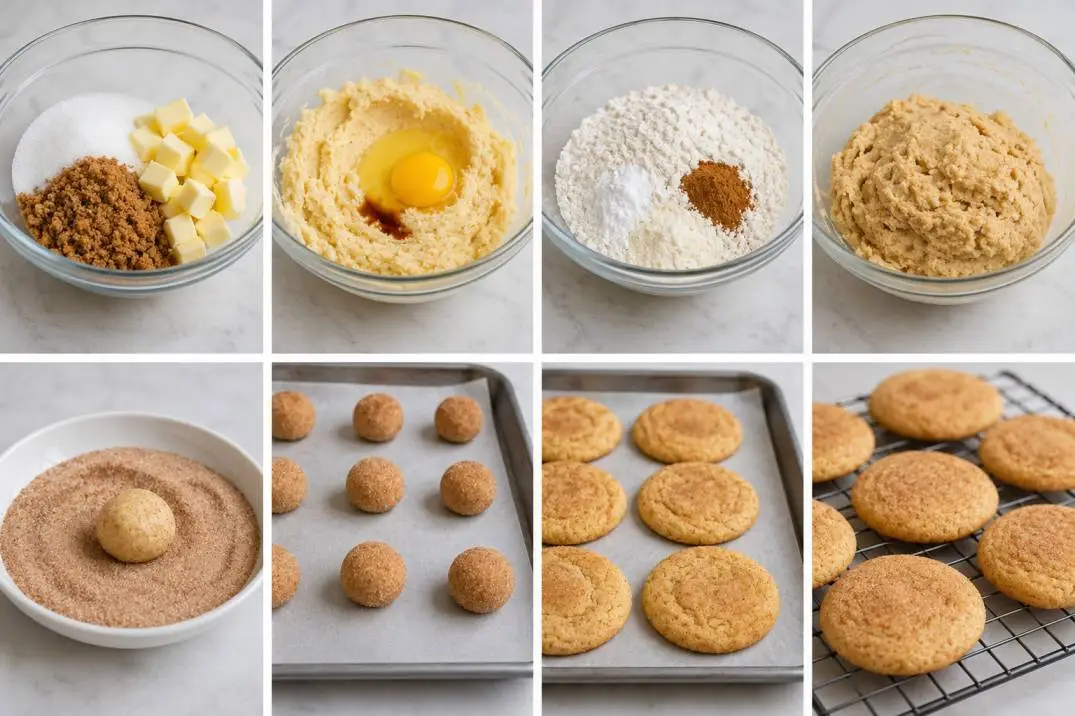
Preheat your oven to 375°F (190°C). Line two baking sheets with parchment paper. Don’t skip the parchment — it’s what keeps the bottoms from over-browning before the centers are done.
2. Whisk your dry ingredients
In a medium mixing bowl, whisk the flour, cream of tartar, baking soda, and salt until well combined. This isn’t just tidiness — whisking distributes the leavening evenly so you don’t end up with one cookie that spreads flat and another that puffs up like a dome.
3. Cream the butter and sugar
In a large bowl (or stand mixer), beat the softened butter and sugar together for a full 2-3 minutes, until it’s genuinely pale and fluffy. Rushing this step is the single most common mistake I see home bakers make. This is where you’re building air into the dough, and that air is what gives you a soft, tender cookie instead of a dense one.
4. Add the eggs and vanilla
Beat in the eggs one at a time, then mix in the vanilla. Scrape down the sides of the bowl so everything incorporates evenly.
5. Bring it together
Add the dry ingredients to the wet ingredients in two batches, mixing on low speed just until combined. Overmixing at this stage develops gluten, and gluten is not your friend here — it’s what turns a tender cookie into a tough one.
6. Roll and coat
Combine the sugar and cinnamon for the coating in a small bowl. Scoop the dough into balls about 1.5 tablespoons each, roll them between your palms, then roll each ball generously in the cinnamon-sugar mixture until fully coated.
7. Bake
Space the dough balls about 2 inches apart on your prepared sheets. Bake for 8-10 minutes. Here’s the part that trips people up: pull them out when the edges are just set but the centers still look slightly underdone and puffy. They’ll finish cooking on the hot pan. This is the difference between a soft, chewy snickerdoodle and a hard, dry one.
8. Cool and enjoy
Let the cookies rest on the baking sheet for 5 minutes before transferring them to a wire rack. That short rest lets the structure set without drying the cookie out.
Makes about 24 cookies.
A Few Things I Wish Someone Had Told Me Sooner
You’re not alone if your first batch or two doesn’t come out picture-perfect. Oven temperatures vary, and “8-10 minutes” is really more of a guideline than a rule. Watch the cookie, not just the timer. Once you see the edges set and the tops start to crackle slightly, that’s your cue.
Also — and this surprises a lot of beginner bakers — chilling the dough isn’t necessary for this recipe the way it is for some cookies. Because there’s less butter relative to flour than in, say, a chocolate chip cookie, snickerdoodle dough holds its shape reasonably well straight out of the mixing bowl.
Frequently Asked Questions
What is the secret ingredient in snickerdoodle cookies?
Cream of tartar. It’s what gives snickerdoodles their signature tangy undertone and softer chew, setting them apart from a basic cinnamon-sugar cookie. Without it, you’ll still get something tasty, but it won’t be a true snickerdoodle.
What does cream of tartar actually do for a snickerdoodle?
Beyond flavor, cream of tartar is an acid that reacts with baking soda to help the cookies rise and stay tender. It also slightly inhibits sugar crystallization, which contributes to that soft, slightly chewy texture snickerdoodles are known for.
Do you use baking soda or baking powder for snickerdoodles?
Baking soda, paired with cream of tartar. Together they function similarly to baking powder, but using them separately gives you more control over the tang and texture. Baking powder alone won’t produce the same signature snickerdoodle flavor.
Is it better to bake cookies at 350°F or 375°F?
For snickerdoodles specifically, 375°F is the better choice. It sets the edges quickly enough to lock in a chewy center, while 350°F tends to let the cookies spread more before they set, resulting in a flatter, crispier cookie.
Give It a Try
Snickerdoodles are one of those recipes that reward a little bit of understanding. Once you know why cream of tartar matters, why you shouldn’t rush the creaming step, and why pulling the cookies out early is a feature and not a mistake, you’ll bake a better batch every single time.
Preheat that oven, grab your cinnamon, and give this one a shot this weekend. And if you try it, I’d genuinely love to hear how your batch turned out — drop a comment below and let me know if the centers came out as soft as they should.