The Secret to Moist Zucchini Bread — And Why Yours Keeps Turning Out Dense
A chef’s honest guide for beginner bakers who want results they’re actually proud of.
Let me be honest with you: I’ve pulled more than a few disappointing zucchini loaves out of the oven. Dense, dry, almost sponge-like bricks that needed three cups of butter just to be edible. And every time, I was convinced I’d followed the recipe perfectly.
Here’s what I eventually learned — moist zucchini bread isn’t about any single ingredient. It’s about understanding why each step matters. Once that clicked, the results changed completely. And I think it’ll change yours too.
Whether you’re baking this for the first time or trying to fix a recipe that never quite works, this guide walks you through everything — including the mistakes nobody warns you about.
Classic Moist Zucchini Bread:
Makes 1 loaf · Prep: 15 min · Bake: 55–65 min · Total: ~80 min
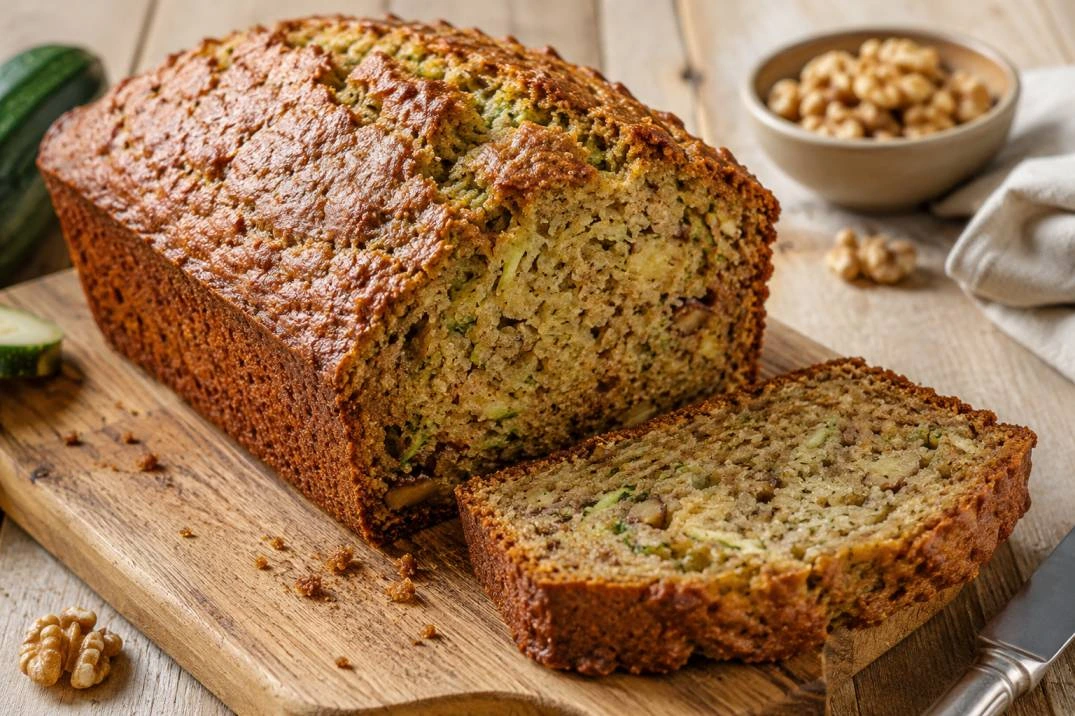
Moist Zucchini Bread Recipe – Soft, Tender & Never Dense
Ingredients
Notes
⚡ Quick Takeaways
- Don’t squeeze the liquid out of your zucchini — that moisture is the whole point.
- All-purpose flour is your friend; cake flour makes it even softer if you have it.
- Oil (not butter) is what keeps zucchini bread moist for days.
- Overmixing is the #1 reason your loaf turns out dense and rubbery.
- Glass pans bake more evenly and gently — a game changer for quick breads.
The Zucchini Itself: Stop Squeezing Out the Good Stuff
This is probably the most common piece of advice you’ll see in zucchini bread recipes: “Squeeze out the excess liquid from your zucchini.” And it drives me a little crazy — because for a moist quick bread, that liquid is exactly what you want.
Zucchini is about 95% water. That moisture slowly releases into the batter as it bakes, keeping the crumb tender and soft long after it comes out of the oven. When you wring it dry, you’re removing the very thing that makes zucchini bread worth making over a plain spice loaf.
Now, should you peel it? No — you really don’t need to. The skin is thin and virtually disappears once grated. Just wash it well, trim the ends, and grate on the coarse side of a box grater. Two cups of grated zucchini is the sweet spot for a standard 9×5 loaf.
The Flour Question: What Actually Works Best
Quick breads are wonderfully forgiving when it comes to flour — but your choice still matters. All-purpose flour is genuinely the best starting point for beginners. It gives the loaf enough structure to hold together while staying soft inside.
If you want something slightly lighter and fluffier, cake flour works beautifully because it has a lower protein content. The result is a more delicate crumb. Avoid bread flour — the higher gluten content will give you exactly the dense, chewy texture you’re trying to escape.
One more thing: measure your flour by spooning it into the measuring cup and leveling it off with a knife. Don’t scoop directly from the bag. Scooping packs in up to 20% more flour than you need, and that extra weight is enough to throw off the whole loaf.
Oil vs. Butter — and Why This Matters More Than You Think
Most traditional quick bread recipes call for oil, and there’s a good reason: oil stays liquid at room temperature, while butter solidifies. That means an oil-based loaf stays moist and tender for two to three days, while a butter-based one can start to feel dry by the next morning.
Neutral vegetable oil or light olive oil both work well. If you want to substitute, unsweetened applesauce is a popular swap that adds a subtle flavor and keeps the texture soft — use it 1:1 in place of oil.
And while we’re talking about moisture: don’t underestimate brown sugar. The molasses in brown sugar is hygroscopic, meaning it actually attracts and holds onto moisture. Swap white sugar for brown sugar in any recipe and you’ll notice the difference immediately.
Step-by-Step Instructions:
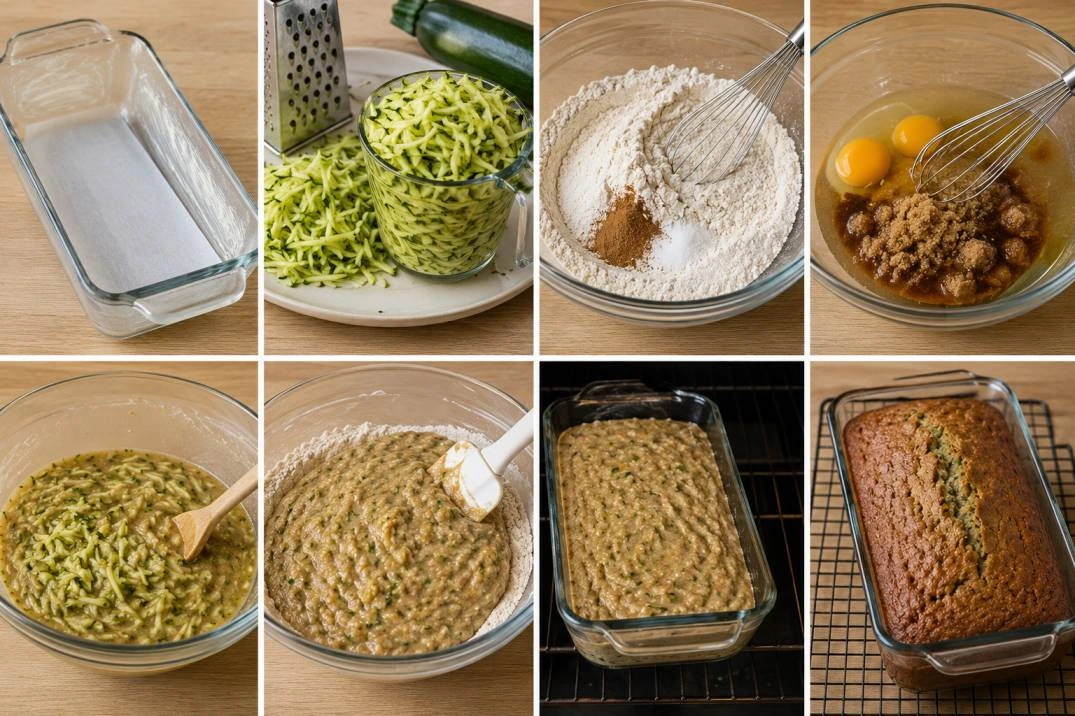
1 – Preheat your oven to 350°F (175°C):
Grease a 9×5 inch loaf pan — a glass pan is ideal for even, gentle baking. Line the bottom with a strip of parchment paper for easy removal.
Grate your zucchini. Use the large holes on a box grater. Loosely pack it into a measuring cup — don’t squeeze. Set it aside on a clean plate.
2 – Whisk the dry ingredients:
In a large bowl, combine the flour, baking soda, baking powder, salt, cinnamon, and nutmeg. Whisk for about 30 seconds so everything is evenly distributed. This small step matters more than it sounds — clumps of baking soda can create bitter spots in the finished loaf.
3 – Mix the wet ingredients:
In a separate medium bowl, beat the eggs lightly with a fork. Add the brown sugar, oil, and vanilla and whisk until smooth and slightly glossy — about 1 minute by hand.
4 – Fold in the zucchini:
Stir the grated zucchini directly into the wet mixture. You’ll notice it looks a little wet and loose — that’s completely correct.
5 – Combine wet and dry — gently:
Pour the wet mixture into the dry ingredients and fold with a rubber spatula just until no dry flour remains visible. You’re looking for a lumpy, slightly rough batter. The moment it comes together, stop mixing. This is the most important step in the whole recipe.
6 – Pour and bake.
Transfer the batter into your prepared pan and smooth the top gently. Bake at 350°F for 55 to 65 minutes, until a toothpick inserted into the center comes out clean (a moist crumb is fine — wet batter is not).
7 – Cool — and be patient.
Let the loaf rest in the pan for 10 minutes, then turn it out onto a wire rack. Don’t cut into it right away — the interior continues to set as it cools. Wait at least 20 minutes. I know. It’s hard. Worth it.
Storage
- Room temperature (wrapped): 2–3 days
- Refrigerator: up to 1 week
- Freezer (sliced): up to 3 months — wrap individual slices in plastic wrap
The Mistakes That Silently Ruin Your Loaf
Even with a solid recipe, a few small errors can quietly sabotage your results. Here’s what to watch for:
Using a metal pan when you don’t have to
Metal conducts heat aggressively, which means the edges of your loaf can brown — or even burn — before the center has fully baked through. A glass or ceramic loaf pan distributes heat more gently and evenly, giving you a more consistent bake from edge to center.
Not accounting for rise
Quick breads need room to expand. Fill your pan no more than two-thirds full, and make sure your baking soda isn’t old. (Quick test: drop a teaspoon into a cup of hot water. If it bubbles enthusiastically, it’s still active. If it just sits there, it’s dead — and so is your rise.)
Skipping the fridge for leftovers
Zucchini bread is moist — and that moisture makes it more prone to mold than drier baked goods. If you’re not finishing it within two days, wrap it tightly and refrigerate it. It actually slices more cleanly when cold.
Frequently Asked Questions
Is it better to bake zucchini bread in a glass pan or a metal pan?
Glass is better for zucchini bread. It conducts heat more slowly and evenly than metal, which helps the loaf bake through to the center without the exterior over-browning. If you only have a metal pan, reduce the oven temperature by 25°F and start checking for doneness about 5 minutes early.
Should you squeeze the liquid out of zucchini for bread?
No — don’t squeeze it. The natural water content in zucchini is what keeps your bread moist and tender throughout baking. Removing it defeats the purpose of using zucchini in the first place. Simply grate it and use it as-is.
What spices go well in zucchini bread?
Cinnamon is the backbone — it’s non-negotiable. Nutmeg adds a warm, slightly earthy depth that pairs beautifully with the mild flavor of zucchini. For a more adventurous loaf, a small pinch of cardamom or a touch of allspice works wonderfully. Keep the spices balanced; zucchini has a subtle flavor and you don’t want to overpower it.
How can I make my zucchini bread fluffier instead of dense?
Three things make the biggest difference: don’t overmix the batter (fold just until combined), make sure your leavening agents (baking soda, baking powder) are fresh and active, and use room-temperature eggs. Cold eggs don’t incorporate as smoothly and can create an uneven texture. If you want a noticeably lighter crumb, swap all-purpose flour for cake flour.