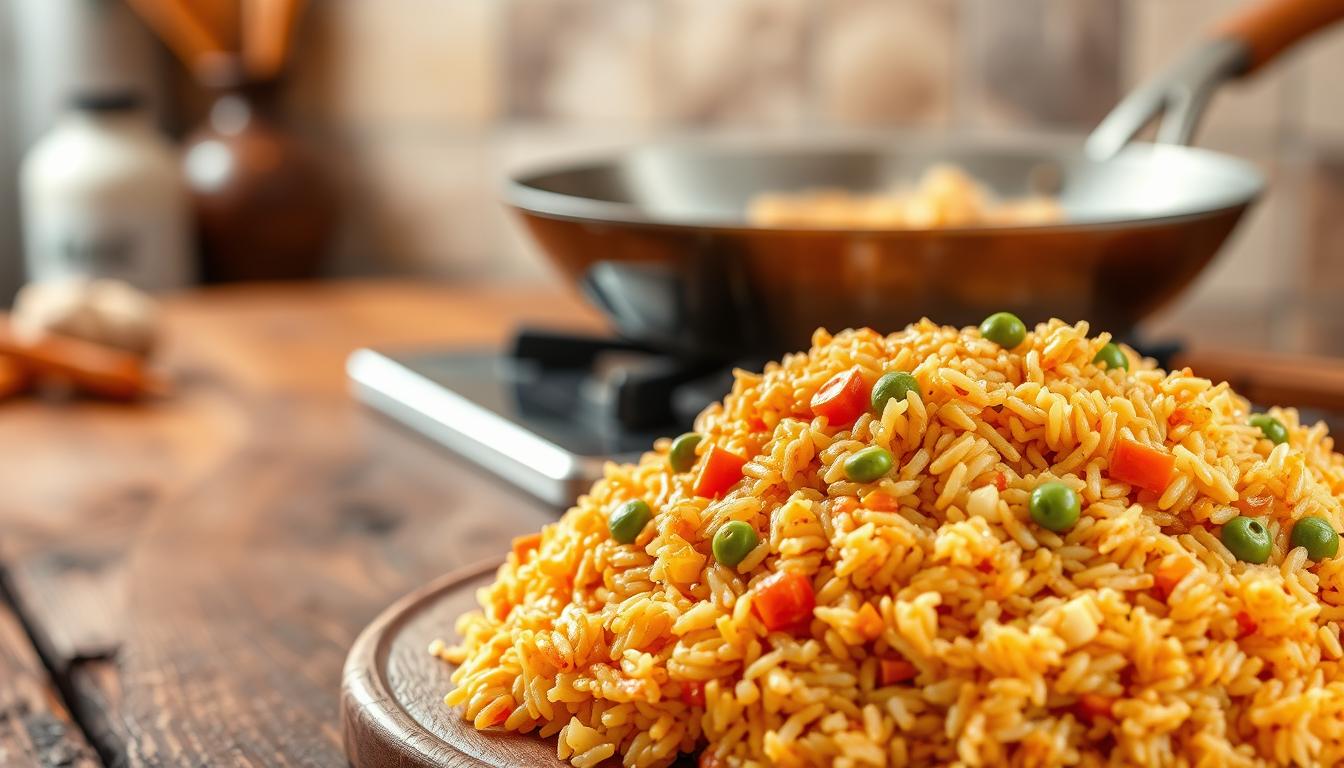
Flavorful Fried Rice: A Step-by-Step Guide
Welcome to our comprehensive guide on making delicious homemade fried rice at home! Fried rice is a staple dish in many cuisines, and with our step-by-step instructions, you’ll be able to create a flavorful and authentic dish.
Whether you’re a beginner or an experienced cook, this guide will help you master the art of making fried rice recipe perfect. With a few simple ingredients and techniques, you’ll be able to create a dish that’s both satisfying and versatile.
Key Takeaways
- Learn the history and key ingredients of fried rice
- Discover techniques to make perfect homemade fried rice
- Explore variations and customization options
- Master the art of cooking fried rice with our step-by-step guide
- Create a delicious and authentic fried rice recipe at home
What is Fried Rice?
Authentic fried rice, a cornerstone of Chinese cuisine, has evolved over time, adapting to local tastes worldwide. This versatile dish has become a staple in many cuisines, with its roots deeply embedded in Chinese culinary history.
Origins and Culinary Influence
Fried rice originated in China, where it was initially a way to utilize leftover rice, making it a practical and economical meal option. The dish spread throughout Asia and eventually around the world, influenced by local ingredients and cooking techniques. Today, Chinese fried rice recipe variations can be found in almost every cuisine, from Asian fusion to modern twists in high-end restaurants.
| Region | Fried Rice Variation | Key Ingredients |
|---|---|---|
| China | Yangzhou Fried Rice | Char siu, shrimp, eggs |
| Indonesia | Nasi Goreng | Sweet soy sauce, chicken, vegetables |
| Thailand | Khao Pad | Fish sauce, Thai basil, chilies |
Why It’s a Beloved Dish
Fried rice is beloved not just for its flavor but also for its versatility. It can be made with a variety of ingredients, from vegetables and meats to seafood, making it a dish that can be tailored to suit any taste or dietary requirement. The ability to customize fried rice has contributed to its global popularity, as it can be adapted to local tastes and ingredients.
Key Ingredients for Fried Rice
Understanding the ingredients is the first step towards making an easy fried rice recipe that’s both satisfying and delicious. Fried rice is a versatile dish that can be customized based on the ingredients you have on hand.
The beauty of fried rice lies in its simplicity and the ability to use leftover ingredients, making it a great way to reduce food waste. To make a simple fried rice, you’ll need to start with some essential staples.
Essential Staples
The foundation of any fried rice recipe is, of course, the rice. It’s crucial to use cooked rice, preferably day-old rice, as it’s drier and easier to stir-fry. Other essential staples include:
- Cooked rice
- Vegetable oil
- Scrambled eggs
- Onions
- Garlic
These ingredients form the base of your fried rice. You can then customize it with your choice of add-ins.
Flavor Enhancers and Add-Ins
To give your fried rice more flavor, you can add various enhancers and ingredients. Some popular options include:
| Ingredient | Description |
|---|---|
| Soy sauce | Adds a salty, umami flavor |
| Oyster sauce (optional) | Adds a savory flavor |
| Vegetables (e.g., peas, carrots) | Adds texture and flavor |
| Proteins (e.g., chicken, shrimp) | Makes the dish more filling |
By mixing and matching these ingredients, you can create a variety of fried rice dishes tailored to your taste.
Whether you’re looking for a quick easy fried rice recipe or something more elaborate, the key is to experiment with different ingredients until you find your perfect combination.
Choosing the Right Rice for Fried Rice
Understanding the characteristics of different rice types is key to making delicious fried rice. The type of rice you use can significantly impact the texture and flavor of your dish.
Long Grain vs. Short Grain
Long grain rice is known for its separate, distinct grains after cooking, making it a popular choice for fried rice. It tends to be drier and less sticky, which is ideal for achieving that signature fried rice texture. On the other hand, short grain rice is clingier and stickier due to its higher starch content, often used in dishes like sushi.
Comparison of Long Grain and Short Grain Rice:
| Characteristics | Long Grain Rice | Short Grain Rice |
|---|---|---|
| Texture After Cooking | Separate, fluffy grains | Sticky, clingy grains |
| Ideal Use | Fried rice, pilafs | Sushi, risottos |
| Starch Content | Lower | Higher |
Day-Old Rice Benefits
Using day-old rice is a common tip among chefs for making the best fried rice recipe. Day-old rice is drier than freshly cooked rice, which makes it easier to stir-fry and helps prevent the dish from becoming mushy or clumpy. This dryness allows for a better separation of grains, resulting in a more authentic and delicious fried rice experience.
To achieve the perfect fried rice, it’s essential to understand the benefits of using day-old rice and how it contributes to the overall texture and flavor. By choosing the right type of rice and allowing it to age, you can elevate your fried rice dishes to a new level.
Essential Cooking Tools
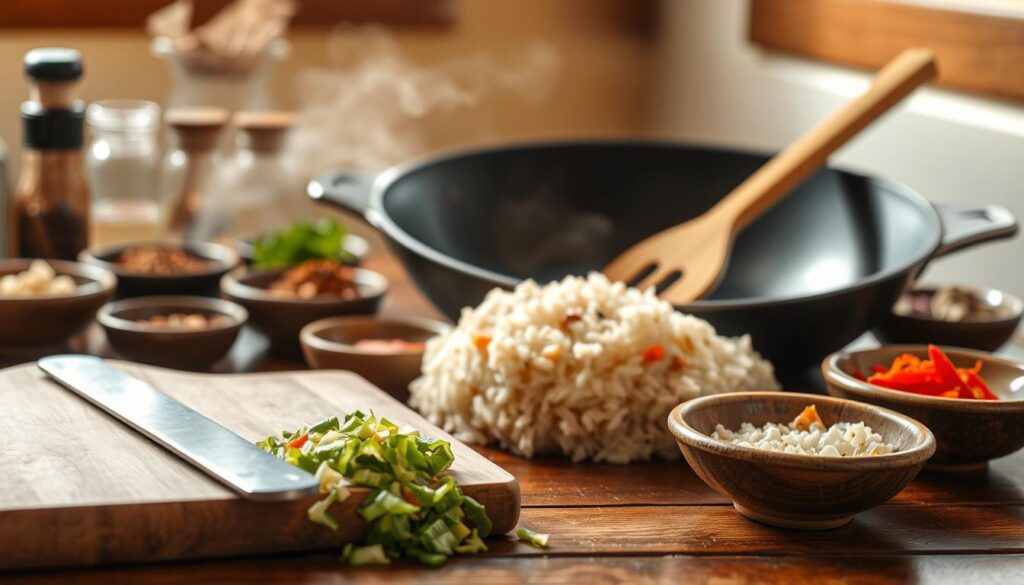
Mastering the art of homemade fried rice requires not just the right ingredients, but also the essential cooking tools. The right equipment can make a significant difference in the outcome of your dish, whether you’re preparing a simple vegetarian fried rice recipe or a more elaborate meal.
When it comes to cooking fried rice, the choice between using a wok or a skillet is crucial. Both have their advantages and can produce excellent results when used correctly.
Wok vs. Skillet
A wok is a traditional Chinese cooking vessel that has been used for centuries. Its large, deep bowl with sloping sides allows for quick and efficient stirring of ingredients, making it ideal for cooking fried rice. The design of a wok enables you to cook ingredients over high heat while constantly stirring, ensuring that your fried rice is cooked evenly and preventing it from burning.
On the other hand, a skillet is a more commonly found cooking vessel in many Western kitchens. While it can be used to make fried rice, it may not offer the same level of ease as a wok, especially when cooking large quantities. However, for smaller servings, a skillet can be a good alternative.
Must-Have Utensils
In addition to choosing the right cooking vessel, having the appropriate utensils is vital for preparing homemade fried rice. A spatula is one of the most essential tools, as it allows you to stir and scoop the rice efficiently. A spatula with a thin, flexible blade is particularly useful for scraping the bottom of the pan and ensuring that the rice is well mixed with other ingredients.
Other useful utensils include a cutting board for preparing ingredients and a set of knives for chopping vegetables and other components of your fried rice. Having these tools on hand will make the cooking process smoother and more enjoyable, whether you’re making a vegetarian fried rice recipe or adding your favorite proteins.
Step-by-Step Fried Rice Recipe
The key to a great fried rice recipe lies in the preparation and cooking method. To make an easy fried rice recipe, you’ll need to start with the basics.
Preparing Your Ingredients
Before you begin cooking, it’s essential to have all your ingredients ready. This includes cooked rice, vegetables (e.g., carrots, peas, onions), your choice of protein (e.g., chicken, shrimp, tofu), and seasonings (e.g., soy sauce, oyster sauce, salt, pepper).
Tips for preparation:
- Use day-old rice to achieve the best texture.
- Chop your vegetables and protein into small, uniform pieces.
- Beat your eggs in a separate bowl before adding them to the dish.
Cooking Technique
The cooking technique is crucial for a successful fried rice recipe. Start by heating a tablespoon of oil in a wok or large skillet over medium-high heat.
Add your protein and cook until it’s done, then set it aside. Next, add more oil if necessary, and stir-fry your vegetables until they’re tender.
Then, add the cooked rice to the wok or skillet, breaking up any clumps with a spatula. Stir-fry the rice with the vegetables, and add your seasonings.
Finally, return the cooked protein to the rice mixture, and stir in your beaten eggs. Continue stir-frying until everything is well combined and heated through.
By following these steps and tips, you’ll be able to create a delicious and authentic easy fried rice recipe that’s sure to please.
Customizing Your Fried Rice
Customizing fried rice is an art that allows you to experiment with various flavors and ingredients, making it a versatile dish for any meal.
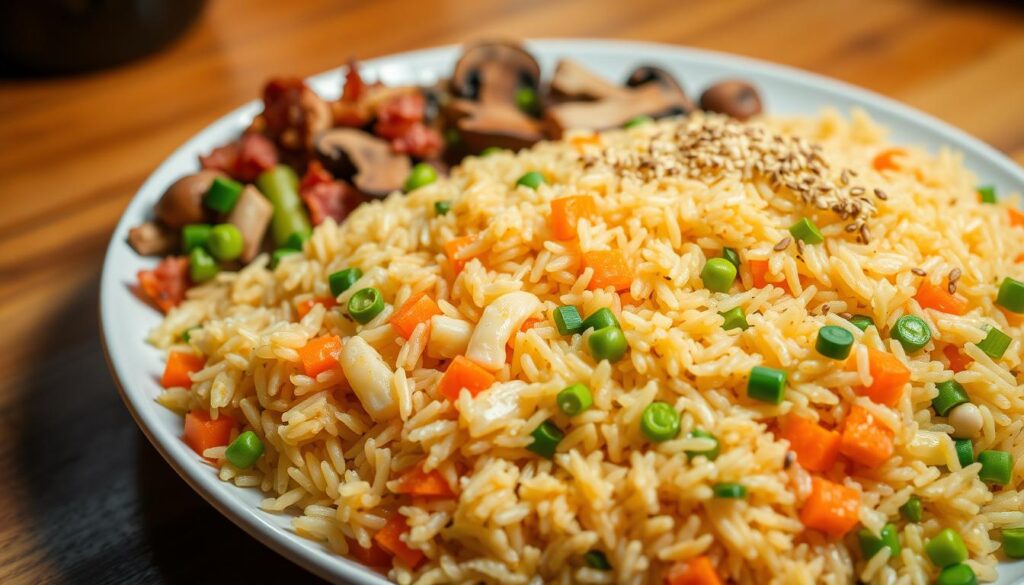
One of the key aspects of customizing your fried rice is deciding on the protein to add. Whether you’re a fan of chicken, shrimp, or tofu, the choice is yours. Adding proteins not only enhances the flavor but also increases the nutritional value of the dish.
Adding Proteins
When it comes to adding proteins, the options are endless. You can choose from chicken, beef, pork, shrimp, or even eggs. The key is to cook the protein separately before mixing it with the rice to ensure it’s fully cooked and safe to eat.
- Chicken: Adds a lean protein source and pairs well with vegetables.
- Shrimp: Provides a seafood flavor and texture contrast.
- Tofu: A great option for vegetarians and vegans, offering a protein-rich alternative.
Vegetarian and Vegan Options
For vegetarians and vegans, fried rice can be just as satisfying without the meat. You can add a variety of vegetables, such as carrots, peas, and corn, to create a colorful and nutritious dish. Using plant-based seasonings and sauces can also enhance the flavor.
- Mushrooms: Add an earthy flavor and meaty texture.
- Bell Peppers: Provide a crunchy texture and sweet flavor.
- Broccoli: Rich in vitamins and adds a nice green color.
Spice Levels
Adjusting the spice level is another way to customize your fried rice. Whether you prefer a mild flavor or something spicy, you can control the heat by adding more or less chili peppers, chili sauce, or sriracha. Start with a small amount and taste as you go to achieve your desired spice level.
- For a mild flavor, use less chili or omit the seeds and membranes.
- For an extra spicy kick, add more chili peppers or use hot sauce.
By customizing your fried rice, you can create a dish that suits your taste preferences and dietary needs, making it a simple yet authentic fried rice recipe that’s all yours.
Common Mistakes to Avoid
Mastering the art of fried rice requires avoiding a few common pitfalls that can make or break the dish. Even experienced cooks can fall into these traps, but being aware of them can significantly improve your best fried rice recipe.
Overcooking the Rice
One of the most critical mistakes is overcooking the rice. Fried rice is typically made with leftover or day-old rice, which is drier and firmer than freshly cooked rice. Using freshly cooked rice can lead to a mushy or clumpy texture, which is undesirable in a good Chinese fried rice recipe. To avoid this, ensure your rice is cooled and preferably a day old before you start cooking.
Using the Wrong Pan
The choice of pan can also significantly affect the outcome of your fried rice. A wok is ideal for making fried rice because of its large, deep shape, which allows for quick and efficient stirring. However, not everyone has a wok, and a large skillet can be a suitable substitute. The key is to use a pan that can distribute heat evenly and has enough room to stir-fry all the ingredients without overcrowding.
By avoiding these common mistakes, you can elevate your fried rice dishes and create a truly delicious best fried rice recipe that will impress your family and friends. Remember, practice makes perfect, so don’t be discouraged by initial attempts. With time and patience, you’ll master the art of making great fried rice.
Storing and Reheating Fried Rice
To enjoy your delicious fried rice for longer, it’s crucial to understand the best practices for storing and reheating it. Proper storage and reheating techniques can make all the difference in maintaining the flavor and texture of your homemade fried rice.
Best Practices for Storage
When it comes to storing fried rice, the key is to cool it down quickly and keep it airtight. Here are some steps to follow:
- Cool the fried rice to room temperature within an hour of cooking.
- Transfer the cooled fried rice into an airtight container.
- Refrigerate or freeze the fried rice promptly.
According to food safety guidelines, cooked rice should be refrigerated at 40°F (4°C) or below within two hours. When refrigerated, fried rice can last for up to 3 to 5 days. For longer storage, freezing is a great option.
| Storage Method | Duration | Tips |
|---|---|---|
| Refrigeration | 3-5 days | Keep it airtight and reheat thoroughly. |
| Freezing | Up to 3 months | Portion into meal-sized containers for easy reheating. |
How to Reheat Without Losing Flavor
Reheating fried rice can be tricky, but with the right techniques, you can enjoy it just as much as when it was freshly made. Here’s how:
- If frozen, thaw the fried rice overnight in the refrigerator.
- Reheat the fried rice in a wok or large skillet over medium-high heat, adding a bit of oil if necessary.
- Stir-fry the rice constantly to distribute heat evenly.
- Add any additional ingredients, such as vegetables or seasonings, to refresh the dish.
“The art of reheating fried rice lies in its ability to be restored to its original freshness and flavor. It’s all about the technique and a bit of creativity.” – A culinary expert
By following these best practices for storing and reheating fried rice, you can enjoy your homemade fried rice for days to come, making it a convenient and delicious meal option.
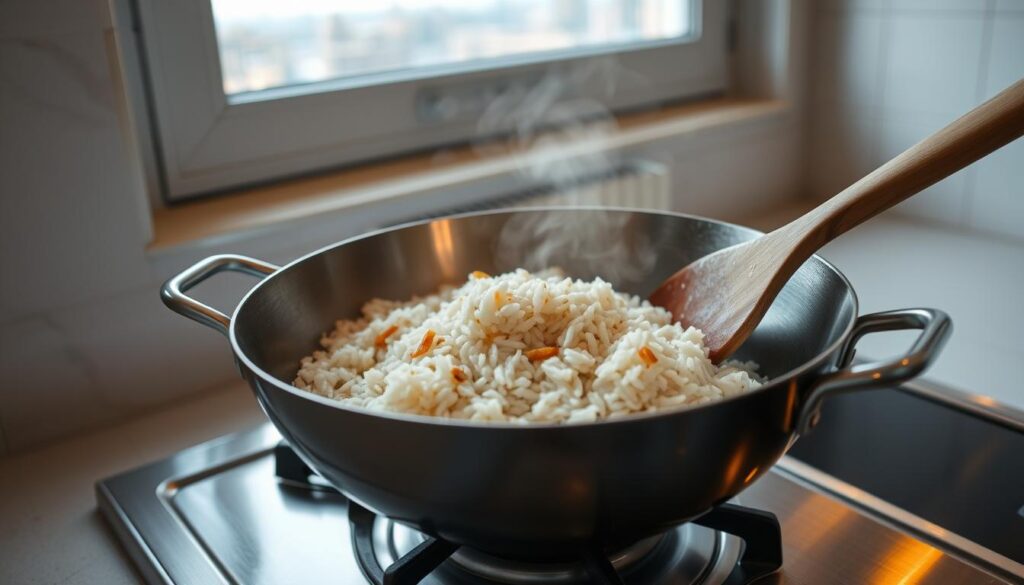
Serving Suggestions and Pairings
Fried rice is a versatile dish that can be enjoyed at any meal, whether it’s breakfast, lunch, or dinner. With an easy fried rice recipe, you can create a delicious meal that’s perfect for any time of day.
Complementary Sides
To complement your fried rice, consider serving it with sides like stir-fried vegetables, egg rolls, or dumplings. For a vegetarian option, pair your fried rice with a vegetarian fried rice recipe that includes a variety of colorful vegetables.
Meal Options
Fried rice can be enjoyed as a main course or as a side dish. It’s perfect for a quick weeknight dinner or as a satisfying lunch. You can also customize your fried rice to suit different tastes and dietary preferences, making it a great option for family meals or gatherings.